Last Sunday, I hobbled my way to a "Save Our Healthcare" rally in La Crosse, Wisconsin. Since mid-November, I have been battling strep throat. After a torturous weekend with my in-laws in Chicago, I went to the walk-in clinic back home and got diagnosed. Not only would this save me money, but I wasn't sure which Chicago hospitals would even take my insurance. I got some steroids and some penicillin and got on the road to recovery.
Not long after I finished the penicillin, I noticed I still wasn't feeling 100%: still fatigued, still battling sore throat, ear, and nose. But, I told myself, I didn't want to risk spending all that money on a doctor's visit. I could gut it out, I said, but a month after my first walk-in visit I went in again and got another dose of antibiotics. During this visit, I asked the walk-in staffer about a rash that had recently shown up on my ankle, and I was told not to worry about it. The second round of antibiotics seemed to finally beat the strep... but by then it was only the beginning.
The rash got worse, bigger, and began to scab over into gray blotches. In desperation, I finally bit the bullet and called the hospital proper. On a day where the terrible, icy weather caused many cancellations, I was able to slip/slide my way to a Dermatologist. After two minutes of examination, he informed me that the rash was a result of the strep slowly making its way out, inflaming my capillaries as it went. This means, possibly for the next four months, I will have this painful rash on my ankle that impairs my walking. On that Sunday, a 31-year-old man hobbled onto an icy sidewalk at a park in La Crosse, walking with the aid of a cane, and all because he tried to save money and gut out a strep diagnosis that eventually got the better of him.
I should have gotten it checked out earlier. I shouldn't have tried to beat it myself. I'm not destitute: I can pay my hospital bills well enough, and I have decent insurance through my wife's work. But I'm not rich enough to where there isn't always that lingering specter warning me to avoid the hospital as much as possible, to try to save every penny in this psychocapitalist system because you never know what's waiting to take it all away. I should have, but I didn't: just another story from America's broken healthcare system.
We are an international embarrassment. We are the only developed nation that does not provide healthcare for our citizens, no questions asked. We are the richest country the world has ever seen, and yet we cannot ask the richest of us to pay a few percentage points off of their billions so I don't have to cut back on eating meat if my kid gets sick? If we want to say we're exceptional, and advanced, and the best country on the earth, then we'd better damn well start acting like it.
Every person. Every time. Every option for care.
Single payer. No exceptions.
Thank you for your time,
Eric M. Leitzen

Democrats can’t win until they recognize how bad Obama’s financial policies were
Note from Doremus Jessup: my apologies, but I have been laid up with a particularly nasty and long-lasting strep infection since Thanksgiving. Regular posting will resume soon. Thank you for your patience.
From the Washington Post:
During his final news conference of 2016, in mid-December, President Obama criticized Democratic efforts during the election. “Where Democrats are characterized as coastal, liberal, latte-sipping, you know, politically correct, out-of-touch folks,” Obama said, “we have to be in those communities.” In fact, he went on, being in those communities — “going to fish-fries and sitting in VFW halls and talking to farmers” — is how, by his account, he became president. It’s true that Obama is skilled at projecting a populist image; he beat Hillary Clinton in Iowa in 2008, for instance, partly by attacking agriculture monopolies .
But Obama can’t place the blame for Clinton’s poor performance purely on her campaign. On the contrary, the past eight years of policymaking have damaged Democrats at all levels. Recovering Democratic strength will require the party’s leaders to come to terms with what it has become — and the role Obama played in bringing it to this point.
Two key elements characterized the kind of domestic political economy the administration pursued: The first was the foreclosure crisis and the subsequent bank bailouts. The resulting policy framework of Tim Geithner’s Treasury Department was, in effect, a wholesale attack on the American home (the main store of middle-class wealth) in favor of concentrated financial power. The second was the administration’s pro-monopoly policies, which crushed the rural areas that in 2016 lost voter turnout and swung to Donald Trump.
Obama didn’t cause the financial panic, and he is only partially responsible for the bailouts, as most of them were passed before he was elected. But financial collapses, while bad for the country, are opportunities for elected leaders to reorganize our culture. Franklin Roosevelt took a frozen banking system and created the New Deal. Ronald Reagan used the sharp recession of the early 1980s to seriously damage unions. In January 2009, Obama had overwhelming Democratic majorities in Congress, $350 billion of no-strings-attached bailout money and enormous legal latitude. What did he do to reshape a country on its back?
First, he saved the financial system. A financial system in collapse has to allocate losses. In this case, big banks and homeowners both experienced losses, and it was up to the Obama administration to decide who should bear those burdens. Typically, such losses would be shared between debtors and creditors, through a deal like the Home Owners Loan Corporation in the 1930s or bankruptcy reform. But the Obama administration took a different approach. Rather than forcing some burden-sharing between banks and homeowners through bankruptcy reform or debt relief, Obama prioritized creditor rights, placing most of the burden on borrowers. This kept big banks functional and ensured that financiers would maintain their positions in the recovery. At a 2010 hearing, Damon Silvers, vice chairman of the independent Congressional Oversight Panel, which was created to monitor the bailouts, told Obama’s Treasury Department: “We can either have a rational resolution to the foreclosure crisis, or we can preserve the capital structure of the banks. We can’t do both.”
Second, Obama’s administration let big-bank executives off the hook for their roles in the crisis. Sen. Carl Levin (D-Mich.) referred criminal cases to the Justice Department and was ignored. Whistleblowers from the government and from large banks noted a lack of appetite among prosecutors. In 2012, then-Attorney General Eric Holder ordered prosecutors not to go after mega-bank HSBC for money laundering. Using prosecutorial discretion to not take bank executives to task, while legal, was neither moral nor politically wise; in a 2013 poll, more than half of Americans still said they wanted the bankers behind the crisis punished. But the Obama administration failed to act, and this pattern seems to be continuing. No one, for instance, from Wells Fargo has been indicted for mass fraud in opening fake accounts.
Third, Obama enabled and encouraged roughly 9 million foreclosures. This was Geithner’s explicit policy at Treasury. The Obama administration put together a foreclosure program that it marketed as a way to help homeowners, but when Elizabeth Warren, then chairman of the Congressional Oversight Panel, grilled Geithner on why the program wasn’t stopping foreclosures, he said that really wasn’t the point. The program, in his view, was working. “We estimate that they can handle 10 million foreclosures, over time,” Geithner said — referring to the banks. “This program will help foam the runway for them.” For Geithner, the most productive economic policy was to get banks back to business as usual.
Nor did Obama do much about monopolies. While his administration engaged in a few mild challenges toward the end of his term, 2015 saw a record wave of mergers and acquisitions, and 2016 was another busy year. In nearly every sector of the economy, from pharmaceuticals to telecom to Internet platforms to airlines, power has concentrated. And this administration, like George W. Bush’s before it, did not prosecute a single significant monopoly under Section 2 of the Sherman Act. Instead, in the past few years, the Federal Trade Commission has gone after such villains as music teachers and ice skating instructors for ostensible anti-competitive behavior. This is very much a parallel of the financial crisis, as elites operate without legal constraints while the rest of us toil under an excess of bureaucracy.
With these policies in place, it’s no surprise that Thomas Piketty and others have detected skyrocketing inequality, that most jobs created in the past eight years have been temporary or part time, or that lifespans in white America are dropping . When Democratic leaders don’t protect the people, the people get poorer, they get angry, and more of them die.
Yes, Obama prevented an even greater collapse in 2009. But he also failed to prosecute the banking executives responsible for the housing crisis, then approved a foreclosure wave under the guise of helping homeowners. Though 58 percent of Americans were in favor of government action to halt foreclosures, Obama’s administration balked. And voters noticed. Fewer than four in 10 Americans were happy with his economic policies this time last year (though that was an all-time high for Obama). And by Election Day, 75 percent of voters were looking for someone who could take the country back “from the rich and powerful,” something unlikely to be done by members of the party that let the financiers behind the 2008 financial crisis walk free.
This isn’t to say voters are, on balance, any more thrilled with what Republicans have to offer, nor should they be. But that doesn’t guarantee Democrats easy wins. Throughout American history, when voters have felt abandoned by both parties, turnout has collapsed — and 2016, scraping along 20-year turnout lows, was no exception. Turnout in the Rust Belt , where Clinton’s path to victory dissolved, was especially low in comparison to 2012.
Trump, who is either tremendously lucky or worryingly perceptive, ran his campaign like a pre-1930s Republican. He did best in rural areas, uniting white farmers, white industrial workers and certain parts of big business behind tariffs and anti-immigration walls. While it’s impossible to know what he will really do for these voters, the coalition he summoned has a long, if not recent, history in America.
Democrats have long believed that theirs is the party of the people. Therefore, when Trump co-opts populist language, such as saying he represents the “forgotten” man, it seems absurd — and it is. After all, that’s what Democrats do, right? Thus, many Democrats have assumed that Trump’s appeal can only be explained by personal bigotry — and it’s also true that Trump trafficks in racist and nativist rhetoric. But the reality is that the Democratic Party has been slipping away from the working class for some time, and Obama’s presidency hastened rather than reversed that departure. Republicans, hardly worker-friendly themselves, simply capitalized on it.
There’s history here: In the 1970s, a wave of young liberals, Bill Clinton among them, destroyed the populist Democratic Party they had inherited from the New Dealers of the 1930s. The contours of this ideological fight were complex, but the gist was: Before the ’70s, Democrats were suspicious of big business. They used anti-monopoly policies to fight oligarchy and financial manipulation. Creating competition in open markets, breaking up concentrations of private power, and protecting labor and farmer rights were understood as the essence of ensuring that our commercial society was democratic and protected from big money.
Bill Clinton’s generation, however, believed that concentration of financial power could be virtuous, as long as that power was in the hands of experts. They largely dismissed the white working class as a bastion of reactionary racism. Fred Dutton, who served on the McGovern-Fraser Commission in 1970 , saw the white working class as “a major redoubt of traditional Americanism and of the antinegro, antiyouth vote.” This paved the way for the creation of the modern Democratic coalition. Obama is simply the latest in a long line of party leaders who have bought into the ideology of these “new” Democrats, and he has governed likewise, with commercial policies that ravaged the heartland.
As a result, while our culture has become more tolerant over the past 40 years, power in our society has once again been concentrated in the hands of a small group of billionaires. You can see this everywhere, if you look. Warren Buffett, who campaigned with Hillary Clinton, recently purchased chunks of the remaining consolidated airlines, which have the power not only to charge you to use the overhead bin but also to kill cities simply by choosing to fly elsewhere. Internet monopolies increasingly control the flow of news and media revenue. Meatpackers have re-created a brutal sharecropper-type system of commercial exploitation. And health insurers, drugstores and hospitals continue to consolidate, partially as a response to Obamacare and its lack of a public option for health coverage.
Many Democrats ascribe problems with Obama’s policies to Republican opposition. The president himself does not. “Our policies are so awesome,” he once told staffers. “Why can’t you guys do a better job selling them?” The problem, in other words, is ideological.
Many Democrats think that Trump supporters voted against their own economic interests. But voters don’t want concentrated financial power that deigns to redistribute some cash, along with weak consumer protection laws. They want jobs. They want to be free to govern themselves. Trump is not exactly pitching self-government. But he is offering a wall of sorts to protect voters against neo-liberals who consolidate financial power, ship jobs abroad and replace paychecks with food stamps. Democrats should have something better to offer working people. If they did, they could have won in November. In the wreckage of this last administration, they didn’t.
From the Washington Post:
During his final news conference of 2016, in mid-December, President Obama criticized Democratic efforts during the election. “Where Democrats are characterized as coastal, liberal, latte-sipping, you know, politically correct, out-of-touch folks,” Obama said, “we have to be in those communities.” In fact, he went on, being in those communities — “going to fish-fries and sitting in VFW halls and talking to farmers” — is how, by his account, he became president. It’s true that Obama is skilled at projecting a populist image; he beat Hillary Clinton in Iowa in 2008, for instance, partly by attacking agriculture monopolies .
But Obama can’t place the blame for Clinton’s poor performance purely on her campaign. On the contrary, the past eight years of policymaking have damaged Democrats at all levels. Recovering Democratic strength will require the party’s leaders to come to terms with what it has become — and the role Obama played in bringing it to this point.
Two key elements characterized the kind of domestic political economy the administration pursued: The first was the foreclosure crisis and the subsequent bank bailouts. The resulting policy framework of Tim Geithner’s Treasury Department was, in effect, a wholesale attack on the American home (the main store of middle-class wealth) in favor of concentrated financial power. The second was the administration’s pro-monopoly policies, which crushed the rural areas that in 2016 lost voter turnout and swung to Donald Trump.
Obama didn’t cause the financial panic, and he is only partially responsible for the bailouts, as most of them were passed before he was elected. But financial collapses, while bad for the country, are opportunities for elected leaders to reorganize our culture. Franklin Roosevelt took a frozen banking system and created the New Deal. Ronald Reagan used the sharp recession of the early 1980s to seriously damage unions. In January 2009, Obama had overwhelming Democratic majorities in Congress, $350 billion of no-strings-attached bailout money and enormous legal latitude. What did he do to reshape a country on its back?
First, he saved the financial system. A financial system in collapse has to allocate losses. In this case, big banks and homeowners both experienced losses, and it was up to the Obama administration to decide who should bear those burdens. Typically, such losses would be shared between debtors and creditors, through a deal like the Home Owners Loan Corporation in the 1930s or bankruptcy reform. But the Obama administration took a different approach. Rather than forcing some burden-sharing between banks and homeowners through bankruptcy reform or debt relief, Obama prioritized creditor rights, placing most of the burden on borrowers. This kept big banks functional and ensured that financiers would maintain their positions in the recovery. At a 2010 hearing, Damon Silvers, vice chairman of the independent Congressional Oversight Panel, which was created to monitor the bailouts, told Obama’s Treasury Department: “We can either have a rational resolution to the foreclosure crisis, or we can preserve the capital structure of the banks. We can’t do both.”
Second, Obama’s administration let big-bank executives off the hook for their roles in the crisis. Sen. Carl Levin (D-Mich.) referred criminal cases to the Justice Department and was ignored. Whistleblowers from the government and from large banks noted a lack of appetite among prosecutors. In 2012, then-Attorney General Eric Holder ordered prosecutors not to go after mega-bank HSBC for money laundering. Using prosecutorial discretion to not take bank executives to task, while legal, was neither moral nor politically wise; in a 2013 poll, more than half of Americans still said they wanted the bankers behind the crisis punished. But the Obama administration failed to act, and this pattern seems to be continuing. No one, for instance, from Wells Fargo has been indicted for mass fraud in opening fake accounts.
Third, Obama enabled and encouraged roughly 9 million foreclosures. This was Geithner’s explicit policy at Treasury. The Obama administration put together a foreclosure program that it marketed as a way to help homeowners, but when Elizabeth Warren, then chairman of the Congressional Oversight Panel, grilled Geithner on why the program wasn’t stopping foreclosures, he said that really wasn’t the point. The program, in his view, was working. “We estimate that they can handle 10 million foreclosures, over time,” Geithner said — referring to the banks. “This program will help foam the runway for them.” For Geithner, the most productive economic policy was to get banks back to business as usual.
Nor did Obama do much about monopolies. While his administration engaged in a few mild challenges toward the end of his term, 2015 saw a record wave of mergers and acquisitions, and 2016 was another busy year. In nearly every sector of the economy, from pharmaceuticals to telecom to Internet platforms to airlines, power has concentrated. And this administration, like George W. Bush’s before it, did not prosecute a single significant monopoly under Section 2 of the Sherman Act. Instead, in the past few years, the Federal Trade Commission has gone after such villains as music teachers and ice skating instructors for ostensible anti-competitive behavior. This is very much a parallel of the financial crisis, as elites operate without legal constraints while the rest of us toil under an excess of bureaucracy.
With these policies in place, it’s no surprise that Thomas Piketty and others have detected skyrocketing inequality, that most jobs created in the past eight years have been temporary or part time, or that lifespans in white America are dropping . When Democratic leaders don’t protect the people, the people get poorer, they get angry, and more of them die.
Yes, Obama prevented an even greater collapse in 2009. But he also failed to prosecute the banking executives responsible for the housing crisis, then approved a foreclosure wave under the guise of helping homeowners. Though 58 percent of Americans were in favor of government action to halt foreclosures, Obama’s administration balked. And voters noticed. Fewer than four in 10 Americans were happy with his economic policies this time last year (though that was an all-time high for Obama). And by Election Day, 75 percent of voters were looking for someone who could take the country back “from the rich and powerful,” something unlikely to be done by members of the party that let the financiers behind the 2008 financial crisis walk free.
This isn’t to say voters are, on balance, any more thrilled with what Republicans have to offer, nor should they be. But that doesn’t guarantee Democrats easy wins. Throughout American history, when voters have felt abandoned by both parties, turnout has collapsed — and 2016, scraping along 20-year turnout lows, was no exception. Turnout in the Rust Belt , where Clinton’s path to victory dissolved, was especially low in comparison to 2012.
Trump, who is either tremendously lucky or worryingly perceptive, ran his campaign like a pre-1930s Republican. He did best in rural areas, uniting white farmers, white industrial workers and certain parts of big business behind tariffs and anti-immigration walls. While it’s impossible to know what he will really do for these voters, the coalition he summoned has a long, if not recent, history in America.
Democrats have long believed that theirs is the party of the people. Therefore, when Trump co-opts populist language, such as saying he represents the “forgotten” man, it seems absurd — and it is. After all, that’s what Democrats do, right? Thus, many Democrats have assumed that Trump’s appeal can only be explained by personal bigotry — and it’s also true that Trump trafficks in racist and nativist rhetoric. But the reality is that the Democratic Party has been slipping away from the working class for some time, and Obama’s presidency hastened rather than reversed that departure. Republicans, hardly worker-friendly themselves, simply capitalized on it.
There’s history here: In the 1970s, a wave of young liberals, Bill Clinton among them, destroyed the populist Democratic Party they had inherited from the New Dealers of the 1930s. The contours of this ideological fight were complex, but the gist was: Before the ’70s, Democrats were suspicious of big business. They used anti-monopoly policies to fight oligarchy and financial manipulation. Creating competition in open markets, breaking up concentrations of private power, and protecting labor and farmer rights were understood as the essence of ensuring that our commercial society was democratic and protected from big money.
Bill Clinton’s generation, however, believed that concentration of financial power could be virtuous, as long as that power was in the hands of experts. They largely dismissed the white working class as a bastion of reactionary racism. Fred Dutton, who served on the McGovern-Fraser Commission in 1970 , saw the white working class as “a major redoubt of traditional Americanism and of the antinegro, antiyouth vote.” This paved the way for the creation of the modern Democratic coalition. Obama is simply the latest in a long line of party leaders who have bought into the ideology of these “new” Democrats, and he has governed likewise, with commercial policies that ravaged the heartland.
As a result, while our culture has become more tolerant over the past 40 years, power in our society has once again been concentrated in the hands of a small group of billionaires. You can see this everywhere, if you look. Warren Buffett, who campaigned with Hillary Clinton, recently purchased chunks of the remaining consolidated airlines, which have the power not only to charge you to use the overhead bin but also to kill cities simply by choosing to fly elsewhere. Internet monopolies increasingly control the flow of news and media revenue. Meatpackers have re-created a brutal sharecropper-type system of commercial exploitation. And health insurers, drugstores and hospitals continue to consolidate, partially as a response to Obamacare and its lack of a public option for health coverage.
Many Democrats ascribe problems with Obama’s policies to Republican opposition. The president himself does not. “Our policies are so awesome,” he once told staffers. “Why can’t you guys do a better job selling them?” The problem, in other words, is ideological.
Many Democrats think that Trump supporters voted against their own economic interests. But voters don’t want concentrated financial power that deigns to redistribute some cash, along with weak consumer protection laws. They want jobs. They want to be free to govern themselves. Trump is not exactly pitching self-government. But he is offering a wall of sorts to protect voters against neo-liberals who consolidate financial power, ship jobs abroad and replace paychecks with food stamps. Democrats should have something better to offer working people. If they did, they could have won in November. In the wreckage of this last administration, they didn’t.

Autopsy: Cold and Broken
If any of you didn't see how Kate McKinnon, in character as Hillary Clinton, opened a recent episode of Saturday Night Live, here it is:
McKinnon performed the song "Hallelujah," originally written by the recently-passed Leonard Cohen, but with some lyrics from a more popular version with lyrics added by Jeff Buckley. Within her performance, and within the words of that song we can see what went wrong with the Democratic Party, and where it needs to go to once again prove a viable alternative to creeping American Fascism.
And yes, I will keep calling it fascism until the MM's lock Doremus Jessup up over at Trianon. I'm not afraid of them, and neither should you be. "And still Doremus goes on in the red sunrise, for a Doremus Jessup can never die." Keep fighting.
After the first verse, which was shared by both song versions, McKinnon sang a Buckley verse next:
Maybe I've been here before
I've seen this room and I've walked this floor
I used to live alone before I knew you
And I've seen your flag on the marble arch
And love is not a victory march
It's a cold and it's a broken Hallelujah
It's here, in this verse, that the chief failing of the campaign is illustrated. The campaign made itself about love; Love Trumps Hate, I'm With Her, the abuela comments, and so many more meant to put a cozy feeling to someone who had been come to be known as cold and calculating. Unfortunately, it was the cold and calculating way the campaign tried to triangulate and manipulate emotions like love, fear, and disgust that made the entire thing seem less like a genuine plea and more like a cynical election strategy.
In short, Love was never meant to have been treated like a victory march. Love, as McKinnon sang, is a cold and broken thing, gained through tears and agony, not something to be paraded about, particularly in a time of staggering inequality, uncertainty, and frustration with the status quo.
Next, McKinnon sang a verse from the Cohen version:
I did my best, it wasn't much
I couldn't feel, so I tried to touch
I've told the truth, I didn't come to fool you
And even though
It all went wrong
I'll stand before the Lord of Song
With nothing on my tongue but Hallelujah
The verse tells the sad story of the entire campaign. She did her best, but her past misdeeds undid her as a flawed candidate. She was out of touch with a majority of Americans, and even in her attempts to relate she still seemed distant and confused with concepts like Snapchat, dabbing, or Pokemon. And unfortunately, it was when truth came out via Wikileaks of her public and private positions, it all went wrong. And now she stands, ready to be judged, with nothing on her tongue but am sad, ironic word of rejoicing. Other Democrats should do the same.
So, now we are on the outside, looking in, cold and broken. But it's here that you find out who your friends really are, and who has really got your back. I'm a DFLer, and I'm damn proud of it. I'm not going anywhere and I'm going to help rebuild this bridge to Social Democratic prosperity brick by brick, if you'll have me. The time has come for Democrats as a party to do what Hillary Clinton was afraid to do, lest she look "weak." We need to apologize. We need to fall to our knees and rend our garments, and apologize to the working class, the minorities, the youth, and so many other segments of society we took for granted. The time has come to utter that cold and broken Hallelujah and realize that things may seem bleak now, but to rejoice that it is a new day for liberals, progressives, and yes, even Democratic Socialists. Everything starts anew, everything begins again, and I'll be here to bring us, all of us, back to glory.
Hallelujah.
McKinnon performed the song "Hallelujah," originally written by the recently-passed Leonard Cohen, but with some lyrics from a more popular version with lyrics added by Jeff Buckley. Within her performance, and within the words of that song we can see what went wrong with the Democratic Party, and where it needs to go to once again prove a viable alternative to creeping American Fascism.
And yes, I will keep calling it fascism until the MM's lock Doremus Jessup up over at Trianon. I'm not afraid of them, and neither should you be. "And still Doremus goes on in the red sunrise, for a Doremus Jessup can never die." Keep fighting.
After the first verse, which was shared by both song versions, McKinnon sang a Buckley verse next:
Maybe I've been here before
I've seen this room and I've walked this floor
I used to live alone before I knew you
And I've seen your flag on the marble arch
And love is not a victory march
It's a cold and it's a broken Hallelujah
It's here, in this verse, that the chief failing of the campaign is illustrated. The campaign made itself about love; Love Trumps Hate, I'm With Her, the abuela comments, and so many more meant to put a cozy feeling to someone who had been come to be known as cold and calculating. Unfortunately, it was the cold and calculating way the campaign tried to triangulate and manipulate emotions like love, fear, and disgust that made the entire thing seem less like a genuine plea and more like a cynical election strategy.
In short, Love was never meant to have been treated like a victory march. Love, as McKinnon sang, is a cold and broken thing, gained through tears and agony, not something to be paraded about, particularly in a time of staggering inequality, uncertainty, and frustration with the status quo.
Next, McKinnon sang a verse from the Cohen version:
I did my best, it wasn't much
I couldn't feel, so I tried to touch
I've told the truth, I didn't come to fool you
And even though
It all went wrong
I'll stand before the Lord of Song
With nothing on my tongue but Hallelujah
The verse tells the sad story of the entire campaign. She did her best, but her past misdeeds undid her as a flawed candidate. She was out of touch with a majority of Americans, and even in her attempts to relate she still seemed distant and confused with concepts like Snapchat, dabbing, or Pokemon. And unfortunately, it was when truth came out via Wikileaks of her public and private positions, it all went wrong. And now she stands, ready to be judged, with nothing on her tongue but am sad, ironic word of rejoicing. Other Democrats should do the same.
So, now we are on the outside, looking in, cold and broken. But it's here that you find out who your friends really are, and who has really got your back. I'm a DFLer, and I'm damn proud of it. I'm not going anywhere and I'm going to help rebuild this bridge to Social Democratic prosperity brick by brick, if you'll have me. The time has come for Democrats as a party to do what Hillary Clinton was afraid to do, lest she look "weak." We need to apologize. We need to fall to our knees and rend our garments, and apologize to the working class, the minorities, the youth, and so many other segments of society we took for granted. The time has come to utter that cold and broken Hallelujah and realize that things may seem bleak now, but to rejoice that it is a new day for liberals, progressives, and yes, even Democratic Socialists. Everything starts anew, everything begins again, and I'll be here to bring us, all of us, back to glory.
Hallelujah.
The Argument for a Landslide
Over the weekend, a thought struck me. Why hasn't there been more of an argument made, outside the occasional New York tabloid, for the necessity of a massive electoral defeat for Donald Trump?
It makes sense as a reason to "vote blue no matter who" more than almost any other reason that's been talked about, and doesn't have to resort to fear-mongering or vote-shaming. The argument goes: Trump is, at the very least, the first step toward American Fascism and Authoritarian rule, so a vote for Hillary is not necessarily a vote for her, or her policies, or even her conduct, but instead a vote against fascism. If the margin is wide enough, we could possibly drive authoritarianism and fascism back to the darkest corners of this country. The issue shouldn't be how much Hillary wins by, but rather how much Trump LOSES by. The bigger the landslide, the bigger the refutation of fascism, authoritarianism, and American demagoguery.
This shouldn't be about which team wins, it should be about a win for all of us, left and right, rich and poor, conservative and liberal. Nothing is gained by allowing our worst nature, whether it is the smugness of fortress liberalism or the danger of far-right fascism, to take hold. The DFL has a unique opportunity to fight what Walter Mondale called the Good Fight as a progressive arm of the Democratic party, and we should work to resemble the better angels of our nature. Whoever assumes the office of President in January, DFLers will have to keep fighting until the dream of a prosperous and progressive national DFL movement is recognized. It has worked in Minnesota, and it can work elsewhere. Keep fighting.
In Solidarity,
Doremus Jessup
It makes sense as a reason to "vote blue no matter who" more than almost any other reason that's been talked about, and doesn't have to resort to fear-mongering or vote-shaming. The argument goes: Trump is, at the very least, the first step toward American Fascism and Authoritarian rule, so a vote for Hillary is not necessarily a vote for her, or her policies, or even her conduct, but instead a vote against fascism. If the margin is wide enough, we could possibly drive authoritarianism and fascism back to the darkest corners of this country. The issue shouldn't be how much Hillary wins by, but rather how much Trump LOSES by. The bigger the landslide, the bigger the refutation of fascism, authoritarianism, and American demagoguery.
This shouldn't be about which team wins, it should be about a win for all of us, left and right, rich and poor, conservative and liberal. Nothing is gained by allowing our worst nature, whether it is the smugness of fortress liberalism or the danger of far-right fascism, to take hold. The DFL has a unique opportunity to fight what Walter Mondale called the Good Fight as a progressive arm of the Democratic party, and we should work to resemble the better angels of our nature. Whoever assumes the office of President in January, DFLers will have to keep fighting until the dream of a prosperous and progressive national DFL movement is recognized. It has worked in Minnesota, and it can work elsewhere. Keep fighting.
In Solidarity,
Doremus Jessup
Historian Julian Zelizer on the Unprecedented Trump-Clinton Campaign
From BillMoyers.com:
Julian Zelizer studies America’s past, but he plays a big role in its present. A professor of history and public affairs at Princeton University, Zelizer is a frequent commentator and guest on the media and writes a weekly column for CNN.com. He is the author of numerous books about American politicians and the American political system, including studies of the presidencies of Jimmy Carter, Ronald Reagan and, most recently, Lyndon Johnson. Recently, he stopped by the offices of BillMoyers.com for a conversation about this year’s presidential campaign. The transcript has been edited lightly for clarity.
Kathy Kiely: So, has there ever been a campaign like this in American history?
Julian Zelizer: No. Usually when I’m asked that as a historian, I can think of something that was pretty much like the campaign that’s taking place, or closely resembles it. In general, this is pretty distinct — obviously as a result of Donald Trump. I think there’s elements of it that we’ve seen in different ways in the past. In 1968, the third-party candidate was somebody named George Wallace, who was the governor of Alabama, and he appealed to white Democrats to join him, through similar appeals based on race — rather than issues of immigration, for example — that we’ve seen emerge again with Donald Trump in this conservative, populist rhetoric that has been very central to his campaign.
In 1964, you saw Republican Barry Goldwater, who wasn’t considered to really be integral to the party at that point, who was far off-center, and was someone who was going to inevitably lose, in the mind of many Republicans — and so there’s an element of that going on today. But it’s very peculiar mix, given his own background professionally, given the media environment in which he’s really thrived, and given his own style, his own political style, which is really quite different than, I think, anything we’ve seen in mainstream, in the two big parties.
Kathy Kiely: Let’s unpack what you’ve said, because you’ve said a lot. One, let’s start with what we’d call the “dog whistle” appeals on issues of race, immigration — class, too. We’ve seen that before, as you’ve said, in American politics — and even, we could go back to the Know-Nothing Party. Why does that keep happening in US — why can we not slay that demon?
Julian Zelizer: Well, there are many social divisions that are deeply embedded in American political culture. Race is one of them. Ongoing nativist sentiment is another. And these are issues that, even with a lot of progress that we have made, remain pretty popular with parts of the electorate.
Part of it is just historical — it’s actually part of American culture at this point, even though we don’t want to admit it. And part of it is a political creation, meaning it’s often employed by politicians as a way to appeal to constituencies, often targeting people who are angry or frustrated about something else, and this becomes an easy way to try and win them over. But it’s very old, and again, people watch Donald Trump and then hear him talk about the wall, for example, to keep Mexicans out — and the way he describes Mexicans, or the way he talks about racial issues that have been taking place around policing, and his calls for law and order — and that’s something you can find in many campaigns, either explicitly, like a George Wallace, or more implicitly, like Richard Nixon in 1968.
So it’s really a key part of our fabric, and that’s why, you know, many people were cynical in 2008, even though we had this historic moment on race and an African-American president, there were many who doubted whether the country had really changed. And I think many feel, eight years later, that it didn’t change quite as much as some were hoping for.
The roots of voter anger
Kathy Kiely: Do you, from your perspective as a historian, notice any trends or trigger points that cause this type of politics to be more successful or to bubble up at particular times, and if so, why do you think now it’s become so salient in this campaign?
Julian Zelizer: Well, the one that is a constant is when there’s economic discontent, there’s a lot of room for these kind of appeals. And so whether you’re talking about the Great Depression in the 1930s, or whether you’re talking about situation like today, where you have structural problems in the economy — middle-class insecurity, for example — even if the economy is doing much better than what happened in the 1930s, that’s a time where there’s a lot of room for politicians to find an explanation for it in something other than the most direct causes, that are going on with the economy.
Part of it, today we’ve had a huge influx, since 1965, of new peoples into this country. It’s not unlike the turn of the 20th century, when you had immigrants from Eastern and Southern Europe coming in in huge numbers — and that makes people who are already here anxious. Not everyone, but some, and that’s why you can appeal to it.
Kathy Kiely: And people think about the 1964 Civil Rights Act, but in many ways the immigration bill that [President Lyndon] Johnson signed was perhaps even a bigger change in the United States, no?
Julian Zelizer: It was a very important piece of legislation. It wasn’t really focused on in 1965; it was often legitimated the same way civil rights had been. The supporters, like Ted Kennedy of Massachusetts, or Emanuel Celler of New York, both saw this as an extension of the same kind of liberalism that was leading to desegregation through the Civil Rights Act.
But at the time, most people thought it was abandoning restrictions that were put into place in the 1920s for Europeans — and what they didn’t see was the way it would open the door to new groups, and as those new groups came and as the country became — and in many ways, as the liberalism of the country toward immigrants allowed popular culture to change, allowed neighborhoods and cities and suburbs to change — there were pockets who resisted. So sometimes the resistance comes because immigration has such a big effect all over the country.
Kathy Kiely: The election of Barack Obama and the nomination of Hillary Clinton — both trailblazers: one, the first African-American president, one potentially the first woman president — certainly the candidate who has come closest to breaking that barrier. Has that intensified the nativist, reactionary sentiments, do you think? Those back-to-back trailblazing decisions by the Democratic Party?
Julian Zelizer: I think it has. The only cautionary note I would say is that social scientists who study polarization in the electorate have looked at how this polarization has been taking place, really since the ’70s, and so the animosity that you see on one side toward the other — and particularly with Republicans toward Democrats — didn’t all start with Barack Obama. And so, a quick history of the Bill Clinton years finds similar kinds of rhetoric. It’s not racially tinged, but conspiratorial arguments about him — such as when Vince Foster committed suicide — and obviously his impeachment in 1998.
So the kind of heat that we feel today exists before these two candidates. So part of it is a result of the polarization in the electorate, and part of it is about particular changes in the Republican Party that’s led many voters to be more ideological, to move farther and father away from the center, to listen to conservative news outlets in ways that Democrats don’t tend to do, according to the recent studies. But then you have that infrastructure, that foundation, and then comes an African-American Democrat, followed eight years later by a female Democratic nominee. So they are not the cause of this, but certainly it took that very volatile feeling in parts of the GOP, parts of the electorate, and seemed to confirm some of the warnings that conservatives had been talking about.
Some of it is explicitly racial, some of it is explicitly sexist. Some of it isn’t. It’s simply that those changes are part of a mix, I think, that voters see about the country becoming very liberal or “politically correct” is the terms that’s often used. So there’s different factors, I would say, for different voters. We don’t want to put them all under one category.
Kathy Kiely: The animus that you identified is really interesting. I was at an event a week ago or so, at the National Press Club It was a fundraiser for a journalism organization, and it was a spelling bee — kind of a tradition that the politicians face off against the press. And there were a lot of members of Congress there to spell, but there were no Republicans, and I thought that was really striking. Why do you think that has happened? And is there any historical precedent for that kind of political polarization, where members of Congress aren’t associating with each other, in past history?
Julian Zelizer: It’s certainly gotten worse. The divisions between the parties or between different factions of the parties, is always part of American politics. So, in the 1950s and ‘60s, it wasn’t Republicans versus Democrats, but the animosity between Southern Democrats and Northern Democrats could be very intense, over big issues like race relations. And in the 19th century, we had pretty intense partisanship.
That partisan or intra-partisan division has now, on top of it are the kind of personal relations that you’re talking about — the acrimony between members of Congress — and that has certainly been getting worse since the ‘70s and ‘80s, so it makes those divisions worse. There are structural changes that probably fuel it. Again, certainly the media has been very important in why some of the relations between the parties have severed.
Some of the demands that legislators now face for fundraising is another factor people talk about, where there’s literally less time for legislating — even if they’d like to meet each other, they really can’t, and so they’ll naturally spend the limited time they have with members of their own party. The parties on Capitol Hill got a lot stronger in the past few decades. They created political action committees, for example, the leaders, so that they could make sure that everyone voted the same way, and when you have that, it’s going to have an effect on the culture of Congress.
So there’s a lot of changes that have been going on. And the second thing is that, since 2010, the Republican Party has moved rightward on Capitol Hill, with the tea party — which is now called the Freedom Caucus — it is not, people say it is not the same in both parties. What you’ve seen is, the shift has been more dramatic in the GOP since 2010, and that also is fueling this kind of discord on Capitol Hill.
The role of Congress
Kathy Kiely: Do you think that the next president will be able to work with Congress?
Julian Zelizer: Doubt it. Certainly, if you have divided government, it’s going to be, in either scenario, very hard. It’s inconceivable, almost, to imagine a Republican Congress working with Hillary Clinton on most issues, once she was in. It’s not as if Barack Obama governed as a leftward Democrat in his first years, and even on the stimulus in 2009, he could barely get any Republican votes.
So many years later, as the polarization has become worse, there’s not going to be a lot of Republicans who want to cut deals with her. They will be frustrated, they would be angry about how this election unfolded, and my guess is what you see with Supreme Court nominations, what you see with the budget in the last few years — where things are not done on purpose, for political reasons — that will continue.
You know, the question some people have is, what would Donald Trump do as president, if he won with a Democratic Congress, or even with a Republican Congress and a larger Democratic minority? Some say he would be willing to cut any deal, and he’s not loyal to his party at all, and he’s not loyal to conservatism on most issues. So the only possible scenario some outline is that, that for his own preservation, for his own success, he’s willing to cut some deals. But it’s still very unlikely. I mean, I think the odds are for gridlock, as we’ve seen.
Kathy Kiely: Can you think of any past president who’s had a personality like Donald Trump’s?
Julian Zelizer: No. I can’t.
I mean, the one comparison people make — although the personality is very different — is Reagan, in that he was very conscious of the public role of the president — not as an entertainer, but as a celebrity of sorts. He was very conscious of how things looked and how it would play to the media, that interested him. He was less interested in the party than appealing to the people that brought him to the White House — and I think there’s some of that in Donald Trump.
But we have not had someone this brazen in the White House, this polemical, this openly angry, in some ways, and willing to be vicious in their rhetoric, that I can think of, certainly in modern times.
Kathy Kiely: And do you think the structure is there in Washington, were Donald Trump to be elected, to contain him? That’s what some of his backers seem to say, is, “Oh well, you don’t have to worry about impulsivity, because a president is surrounded by checks and balances, constitutional and otherwise.” Do you think that’s true?
Julian Zelizer: Well, it is true that presidents don’t have a free hand, and it’s true that when everyone enters the White House, whether you’re Donald Trump — possibly — or whether you’re any of the presidents we’ve had recently, you quickly find all the checks that exist. Even in an era when we talk about “imperial presidents.”
It’s true that Congress still has a lot of power to impeach, to oversee, to generate scandals through hearings and to withhold budgetary money. It’s true that the courts can still be very powerful. Look, Barack Obama has learned this every step of the way, how limited his power is, even after being re-elected and being very popular. But presidents can still do bad things.
Executive power is pretty significant in this day and age, and in matters of war and diplomacy, Donald Trump would still have a lot of leeway to at least start things, even if there’s pushback. And even on domestic policy, on issues like immigration, the president has power to increase deportation — as Barack Obama has done, he could do it even more dramatically. So there are checks, there are constraints, there are limits to presidential power, but there’s still power there, and so I think it’s a mistake to say he can’t really do anything once he’s in office.
Kathy Kiely: Given what you’ve said about the limits on presidential power, do you think we pay enough attention to congressional elections?
Julian Zelizer: We don’t. We never do. The only time we pay more attention to it, certainly, in the media, is usually the first midterm a president faces, because it’s often a rejection of what the president has done, so there’s a kind of drama to the story that’s difficult with congressional elections. They’re messy, there’s lots of them, a lot of them are about local issues, they’re all over the place.
So it’s easier to talk about the president — two people, head-to-head, one outcome. But it’s all decentralized and fractured, so generally congressional elections don’t get as much attention. They have had a little more in recent years because of this first midterm backlash, which is an important story — but I think people should pay more attention to them, because what you see is the composition of Congress has a huge impact, really significant effect on what a president can or can’t do, and with all the attention in 2008 to Barack Obama and to the significance of his victory, I don’t think there was enough attention being paid to some what was brewing on Capitol Hill.
Obviously Democrats had a majority, but that eroded right away, and no one saw what was coming, I think, in terms of the ferocity of the Republican opposition. No one saw the tea party — even though you could see a little bit of it running already in 2008 — and so if you missed the congressional elections, you don’t think of both who has the majority or what kind of minority you’ll have, you don’t have a really good sense of what a presidency is going to be about. So I’ve always been a big proponent of looking at Congress, of focusing on Congress, but congressional elections are a big deal.
And it’s interesting — Hillary Clinton has cared a lot about throwing support to Democrats who are running, and I think it’s in part because of her experience. She understands that she will need very strong support on the Hill to overcome the resistance she will encounter from Republicans, so she’s been trying to win some of that loyalty during her campaign. Whereas, in the primaries, Bernie Sanders didn’t do as much of that, and Donald Trump certainly isn’t doing that for the GOP.
Kathy Kiely: Do you think we’re at a flexion point in our democracy, where some enormous changes are going to have to be made? Whether it’s with traditions like the electoral college, or the way our parties are organized, or even one party changing, morphing into something else? Are we there?
Julian Zelizer: I’m not sure. Of all the issues where there seems to be a real need for change, in the short term, it’s money in politics. And that’s not simply because voters don’t like money in politics, but there’s many politicians who don’t like money in politics. That’s what’s striking when you talk to members on the Hill.
And when you have that, that’s when there is a potential to change. If something happens, if there’s some mover — whether it’s a scandal or whether it’s some entrepreneurial president or legislator who figures out how to do that. I think that’s an area where the problems caused by the political process are severe, the impression that the process gives to voters is consistently bad, and it keeps getting worse and worse. It’s not a problem that’s basically where it’s been — the influx of money is just becoming quite astounding. And so that’s the area where I keep thinking there’s potential for something to happen.
The Electoral College, I don’t think is going to change. If it didn’t change after 2000, it’s going to be hard to change now. And finally, do the parties change? I don’t think you’re going to have a third party.
I think the parties are still very strong institutions, because of the organizational capacity, because of their ability to deliver money — but you know, the business/Wall Street sector has had a huge influence in the GOP, and it is conceivable that some of their clout diminishes if Donald Trump were to win. They might go to the Democratic Party — you might see shifts, like in the ‘70s, the Democrats and Republicans remain the parties, but the South went to the GOP after civil rights. There was a shift. And I could imagine something like that, but based on class and economics, as opposed to region.
Will millennials vote?
Kathy Kiely: You teach millennials.
Julian Zelizer: Mm-hmm [yes].
Kathy Kiely: What’s their attitude about the election, and are they going to vote?
Julian Zelizer: I don’t know if they will vote.
They were very engaged in the primary. That was striking. And it was because of Bernie Sanders. I had a few people who really loved Hillary Clinton, but not many. And so I think Sanders brought them in. I don’t know, I think it’s going to be a competition between how much millennials dislike and fear Donald Trump, versus how uninterested they are in Hillary Clinton — as opposed to Hillary Clinton really energizing them, as some people keep saying she’s going to do. I don’t think that’s going to happen.
You know, I’m not sure their sense of the potential dangers that some people see from a Donald Trump presidency are as great as older voters. In some ways they’re so cynical, millennials, about the process — not about politics, but about the political process — it’s not as if he’s the reason that this is broken. That there’s bigger issues we have to deal with, which isn’t that totally inaccurate.
Kathy Kiely: And what do you think the chances are that those bigger issues do get dealt with in the next four years? And what would you say are the top three?
Julian Zelizer: Well, the top one is middle-class insecurity. That is, I think that’s the issue. It’s not about a recession, it’s not about economic growth versus slow growth, fast growth — it’s about how do working and middle class Americans regain the security that they felt in the 1950s after World War II and at the height of union power? Can they achieve that again? So that they don’t feel that they might have to have three or four jobs or that their job might be gone within a week or two, or that they would have no savings or no money to pay for their kids’ education. That’s issue No. 1.
A second issue is race, and I mean, after what we have seen in the last few years, this country still has a big problem with race. And the issue of policing and race is right now at the top of civil rights agenda. And I don’t think it’s clear how we get out of this, but it’s clear we can’t — this isn’t sustainable, and ultimately it’s not simply because of the impact on African-American communities, but the police will lose their authority and stature, if this continues. So I think that’s a second issue that we face.
And I think immigration is the issue that obviously brought Donald Trump to this position, but we have millions of people who are living in limbo right now. And so part of it is about the wall or no wall, but I think the real immigration issue that neither Obama was able to solve, President George W. Bush couldn’t solve, was what happens to the, whatever, 11 million people who are living in this country whose future is uncertain. I think we have to have a resolution to that. It’s a human rights issue, and this isn’t something we can keep doing.
Kathy Kiely: Do you think the emergence of Donald Trump is going to make Republicans on Capitol Hill more likely or less likely to want to get things done?
Julian Zelizer: That’s a good question. So, if he became president, where would the Republicans be? There would be incentives for them to do something — the problem is, if it could converge with what he wanted. Meaning, if he won, the Republicans would feel happy. They would have regained control of the White House, but I do think many of them wouldn’t like the image of the party that has now emerged.
I think there are many Republicans, even very conservative, right-wing Republicans, who are upset — not because of the policies, but just the image he represents and some of the kinds of rhetoric that he has used. That’s not the party they want to be in the long term. And they understand the difference between someone who, in the short term, might have a window, versus someone who, in the long term, has a vision for building a durable coalition — like Democrats had in the 1940s and ‘50s, or Republicans had for much of the ‘80s and ‘90s.
So why would they want to move forward on legislation? They could define their party as something other than Donald Trump. And other than the next candidate, that’s the way you do it. They would want to be the party that delivered, you know, legislation on something. But it would be hard, it would be hard because, again, it’s not simply the tension between Trump and the GOP. It’s the tension within the GOP between the tea party and other parts of the party, and on issues like climate change, immigration, there is no agreement. So, they’ll want legislation, but I don’t know if it will actually emerge.
Kathy Kiely: And have you ever seen a time in history where a party has been under that kind of internal stress? And is there anything we can compare it to that might give us some insight as to where this is going?
Julian Zelizer: Sure, in the ‘50s and ‘60s, race, ‘30s through ‘60s. Southern Democrats, by and large, were adamantly opposed to any federal effort to obtain civil rights legislation, voting rights legislation. Northern liberals, whose numbers were growing and who were becoming more prominent — people like Hubert Humphrey from Minnesota in the Senate — they are really more angry about the Southern Democrats than they are about the Republicans, because they’re the ones with power, the Southerners are the ones holding up the legislation.
And you have really fierce encounters, not unlike what you see on immigration today within the GOP.
So in 1948, Humphrey is running for the Senate, and he famously makes a speech at the Democratic Convention in Philadelphia, where he tells the Southerners that it’s time to, you know, abandon this states’ rights idea — which is a way to block civil rights — and move into a new moment of human rights. And tells them, “If you’re not with us, leave.”
And some Southerners, like Strom Thurmond, do, and they’ll actually have a third party challenge. And you see this fight over and over again, until many Southerners decide, en masse, to leave the Democratic Party. So those were really bitter fights — so I think that’s an example that is comparable to what we’re seeing today.
Kathy Kiely: And do you see a Republican equivalent of Lyndon Johnson, whom you wrote about?
Julian Zelizer: Not right now. You know, I think certainly Donald Trump is not that person. It’s not clear he would be able to bring the party together.
In part, Lyndon Johnson was at the core a Democrat. He’d been part of the party, he was loyal to the party — he was unusual in that he was loyal to a lot of the liberal ideas from the New Deal, but he also had a relationship with the Southerners. He had deep experience on the Hill, so people knew him, they liked him, whereas Donald Trump is a total outsider — to Congress, for sure. He’s not necessarily to loyal to anyone within the Republican Party, so no one totally trusts him. So Johnson famously, in 1957, Robert Caro writes about how he won over Southern support for a — to allow a really watered-down bill to pass, based on the idea that in the end, Johnson was protecting the party, he was going to protect the South from something more stringent.
Whereas Donald Trump doesn’t have that kind of clout, and the Republican leaders in Congress have been consumed — as Speaker Boehner was — by this tea party faction. So right now, it’s not clear who that leader would be, or who that figure could be in the party.
Kathy Kiely: So in some ways, is this unprecedented? For the party, I mean, having something so outside and so foreign to the party buffeting the leaders? It’s out of their control, right? Is that what you’re saying?
Julian Zelizer: It was, but if we think back to the ‘60s, the solution wasn’t just Lyndon Johnson, it was the civil rights movement. So what’s remarkable about the early ‘60s is how the movement ultimately forced the issue to be resolved, regardless of all these fights the leaders were having. Johnson was really important, and he was instrumental, but it was a grass-roots change that happened.
And so, that could happen again. I mean, the immigrant and pro-immigration community is very strong, very well-organized, and it’s been fighting. It takes time, it’s not going to happen in a couple years. But it could be that ultimately the tensions are not solved by anyone in Washington, that grass-roots politics ultimately forces this off the agenda. And ironically, the party could then reconstitute itself.
The role of the media
Kathy Kiely: Okay. So, I wanted to ask you a little bit about the media, because you talk about that. How do you see that playing — the changes in the media — playing into this year’s campaign? And again, is there any precedent in history?
Julian Zelizer: So, the media is very important. I’m not someone who thinks the media created Donald Trump. I don’t believe that, but I do believe he’s exploited the media very well.
And we’ve seen politicians who, at key moments, get how the media’s changing and use it well. So, the most famous example is FDR in radio, with his fireside chats — and he understood that allowed him to communicate directly to the public. Sen. Joseph McCarthy in the early 1950s, the late 1940s, understood the way journalism was practiced through objectivity gave him space to say whatever he wanted and have journalists repeat it, without feeling the room to be inquisitive, and he could get his charges out there.
Jimmy Carter in 1976, during the Iowa caucus and New Hampshire primaries — this unknown governor from Georgia — understood how the new media was becoming very influential in that part of the selection process, because the party bosses lost their power. So, you know, he dressed in jeans and overalls and he sold himself, rather than him being a Democrat — and he was pretty masterful at it.
And Ronald Reagan, of course, was one of the best at understanding how television was now working. He and his team would, for example, use the line of the day, when he was president — where the whole day would be orchestrated around a single theme, so that reporters would have something to write about that would match what they wanted to get out there. So this isn’t the first time —
Kathy Kiely: And of course, Newt Gingrich, with C-SPAN.
Julian Zelizer: Newt Gingrich brilliantly understood — both in the ‘80s and after he was speaker — C-SPAN, this channel that not a lot of people watched, compared to the networks, but still had a big viewership, offered a great opportunity for someone, even before he was the leader, to just get on and make these one-minute speeches. And he even understood the theatrics, that all you could see was the speaker, so he could — the person speaking — so he could make all kinds of outlandish charges about people in the room, who weren’t actually in the room.
Donald Trump comes out of that tradition. I do believe that is somewhere where he is skillful. You might like him, not like him, but he’s understood what Twitter offered, and no one saw that before this campaign. Not that Twitter was important, but that a candidate could directly communicate with people at all moments, in an informal manner, in a manner aimed at generating readers, that with 140 characters, you could run a campaign. And I think he’s part of that tradition. But there are also changes in the media that are disturbing to many observers. That in this new 24-hour media — that’s not new anymore, we’ve really had it since the 1980s — but in the age of cable television, internet news and more partisan forms of news delivery, that there was room for someone who was theatrical and whose words and statements were often aimed at winning over coverage, constant coverage, there’s — Trump people, for example, so they understood that the new media needs content. That there’s just so many outlets right now, and they’re looking for news all the time, that they would produce the story, and that kept him in the game.
So the nature of the news is part of why Donald Trump, I think, is doing so well. He’s been able to work very well in that environment, and the partisan news — so you have the 24-hour news, and then you obviously have, since the 1990s, more partisan outlets where news is told in a particular way, and that fuels the kind of polarization that Donald Trump has done very well exploiting.
Kathy Kiely: And it also, doesn’t it, allow for propaganda to be presented in a more effective way? For example, the birther lie had legs for a long time — would that have been possible in an earlier era?
Julian Zelizer: It would be much harder. So the birther lie could be compared a little bit to some of the McCarthyite attacks, where he would say things, and his colleagues would say things about Communists being a part of government, that had no basis in fact, and it made the mainstream news.
So there was always room for lies, but there’s a lot more room today than there used to be, and part of it, I think, is just the space available. So even in the 1950s with McCarthy, you still had a few major city newspapers that really shaped the news, you had three networks were to form, and that was it — with their evening news broadcast, which was about 20 minutes, after advertising — and that’s it.
Whereas today, you have so many outlets, there’s many places to get misinformation out in the political sphere, and the editorial controls are just much weaker, because news isn’t going through several layers of editors and producers. It can instantaneously be sent out there, so I think that creates a more volatile environment. And finally, because you have more partisan outlets — both networks, such as a Fox, that are partisan, or even smaller websites — there’s more places that are willing to put things out that work for partisan purposes, like the birther argument, even if it’s not clear they’re true, or it’s clear they’re not true — they can still find space. So I do think we’ve seen an intensification of falsehood in American political rhetoric, which is a problem when you have fact-checkers — but I’m not convinced they really have a big effect, because once a story is out there, it’s out there.
Kathy Kiely: I sometimes tell students, “Now that you’re all publishers, you need to learn to be reporters.”
Julian Zelizer: That’s a good line.
Kathy Kiely: Do you think we need to educate younger people about media consumption in different ways?
Julian Zelizer: I think that would be fantastic. I mean, unfortunately, my guess is, you could only reach a limited part of the population if you find the teachers who are willing to do that. You would have to do this very, you know, significant level to really educate the public. But I think it’s true, because it’s hard to see how the structure of news delivery changes.
You could have more websites, for example, that produce good, factually based news, and hire the best reporters in the country, but they will have to compete in this environment.
And news organizations are less important, because now the news also can get out from an individual — someone puts up a website or tweets things out — and we’ve seen they can be a major voice, all of a sudden. So the education is going to be really important, in terms of consumption. But I don’t know, you know, clickbait works because people want clickbait. And so it’s education, but it’s ultimately, at some point, readers and watchers and listeners having the feeling that this is not beneficial to them or to their democracy, that you’d really have a change.
What historians will write about us
Kathy Kiely: So, last question is: Fast-forward 100 years or 200 years, and there’s a young Julian Zelizer out there writing a book. Who of our era is that young historian going to be writing about, do you think?
Julian Zelizer: That’s a good question. I’m not sure they’re going to write about a person as much as the culture and the system. I think, you know, what’s interesting about Donald Trump, in the long term, isn’t simply him. It’s the, it’s what produced him, what allowed this to happen. What allowed a change in American politics to take place, where someone such as Donald Trump was able to win a major party nomination? And so my guess is, 100 years from now, they’ll be looking at why were the forces of nativism and racial backlash so prevalent in 2016, that you could have a candidate not disassociate themselves from David Duke, and have it be okay?
They will be looking at the kinds of things we talked about with the media, and how the media was changing so drastically, that in some ways he was a perfect person for the moment. He will be less interesting than the media world we had. And finally, we’ll also have people 100 years from now trying to understand how did the electorate become so polarized that voters were just not willing to switch from one side to the other? And that even if someone ran on ideas that didn’t fit with a lot of what the party wanted, and even if someone had no connection to the political party, much of the party would still throw their support behind him, because that’s the world we live. So I think those will be the interesting questions.
And the other sets of questions — less on why the system allowed him — will be the problems in the electorate. So, he and Bernie Sanders, and other candidates keep talking about this economy and this structural problem that many people are yelling and screaming about, desperately. That all is not good.
And I think in the same way that we look at the ‘70s, for example, to understand the end of the manufacturing sector of the economy and the rise of high-tech, I think historians will be trying to understand what was going on now — and I don’t know where this all goes — and how that affected the politics of the period. I think that’s going to be a fundamental question, and related to that will be, how did the political system become so dysfunctional? Because a lot of what gives rise to insurgents is a feeling in the public that the system isn’t working anyway. So with Hillary Clinton, her claims are always undercut, because she can say, “I have experience,” she can say, “I know what I’m doing,” but no one believes Washington’s going to work anyway. So I think there will be people 100 years from now looking at, how did polarization bring the system, in some ways, to a state of gridlock that was this frustrating to voters, that they were willing to go into a very new direction?
Kathy Kiely: Okay, well, in the time capsule where we put this, somebody will find their dissertation topic.
Julian Zelizer: I hope so.
Julian Zelizer studies America’s past, but he plays a big role in its present. A professor of history and public affairs at Princeton University, Zelizer is a frequent commentator and guest on the media and writes a weekly column for CNN.com. He is the author of numerous books about American politicians and the American political system, including studies of the presidencies of Jimmy Carter, Ronald Reagan and, most recently, Lyndon Johnson. Recently, he stopped by the offices of BillMoyers.com for a conversation about this year’s presidential campaign. The transcript has been edited lightly for clarity.
Kathy Kiely: So, has there ever been a campaign like this in American history?
Julian Zelizer: No. Usually when I’m asked that as a historian, I can think of something that was pretty much like the campaign that’s taking place, or closely resembles it. In general, this is pretty distinct — obviously as a result of Donald Trump. I think there’s elements of it that we’ve seen in different ways in the past. In 1968, the third-party candidate was somebody named George Wallace, who was the governor of Alabama, and he appealed to white Democrats to join him, through similar appeals based on race — rather than issues of immigration, for example — that we’ve seen emerge again with Donald Trump in this conservative, populist rhetoric that has been very central to his campaign.
In 1964, you saw Republican Barry Goldwater, who wasn’t considered to really be integral to the party at that point, who was far off-center, and was someone who was going to inevitably lose, in the mind of many Republicans — and so there’s an element of that going on today. But it’s very peculiar mix, given his own background professionally, given the media environment in which he’s really thrived, and given his own style, his own political style, which is really quite different than, I think, anything we’ve seen in mainstream, in the two big parties.
Kathy Kiely: Let’s unpack what you’ve said, because you’ve said a lot. One, let’s start with what we’d call the “dog whistle” appeals on issues of race, immigration — class, too. We’ve seen that before, as you’ve said, in American politics — and even, we could go back to the Know-Nothing Party. Why does that keep happening in US — why can we not slay that demon?
Julian Zelizer: Well, there are many social divisions that are deeply embedded in American political culture. Race is one of them. Ongoing nativist sentiment is another. And these are issues that, even with a lot of progress that we have made, remain pretty popular with parts of the electorate.
Part of it is just historical — it’s actually part of American culture at this point, even though we don’t want to admit it. And part of it is a political creation, meaning it’s often employed by politicians as a way to appeal to constituencies, often targeting people who are angry or frustrated about something else, and this becomes an easy way to try and win them over. But it’s very old, and again, people watch Donald Trump and then hear him talk about the wall, for example, to keep Mexicans out — and the way he describes Mexicans, or the way he talks about racial issues that have been taking place around policing, and his calls for law and order — and that’s something you can find in many campaigns, either explicitly, like a George Wallace, or more implicitly, like Richard Nixon in 1968.
So it’s really a key part of our fabric, and that’s why, you know, many people were cynical in 2008, even though we had this historic moment on race and an African-American president, there were many who doubted whether the country had really changed. And I think many feel, eight years later, that it didn’t change quite as much as some were hoping for.
The roots of voter anger
Kathy Kiely: Do you, from your perspective as a historian, notice any trends or trigger points that cause this type of politics to be more successful or to bubble up at particular times, and if so, why do you think now it’s become so salient in this campaign?
Julian Zelizer: Well, the one that is a constant is when there’s economic discontent, there’s a lot of room for these kind of appeals. And so whether you’re talking about the Great Depression in the 1930s, or whether you’re talking about situation like today, where you have structural problems in the economy — middle-class insecurity, for example — even if the economy is doing much better than what happened in the 1930s, that’s a time where there’s a lot of room for politicians to find an explanation for it in something other than the most direct causes, that are going on with the economy.
Part of it, today we’ve had a huge influx, since 1965, of new peoples into this country. It’s not unlike the turn of the 20th century, when you had immigrants from Eastern and Southern Europe coming in in huge numbers — and that makes people who are already here anxious. Not everyone, but some, and that’s why you can appeal to it.
Kathy Kiely: And people think about the 1964 Civil Rights Act, but in many ways the immigration bill that [President Lyndon] Johnson signed was perhaps even a bigger change in the United States, no?
Julian Zelizer: It was a very important piece of legislation. It wasn’t really focused on in 1965; it was often legitimated the same way civil rights had been. The supporters, like Ted Kennedy of Massachusetts, or Emanuel Celler of New York, both saw this as an extension of the same kind of liberalism that was leading to desegregation through the Civil Rights Act.
But at the time, most people thought it was abandoning restrictions that were put into place in the 1920s for Europeans — and what they didn’t see was the way it would open the door to new groups, and as those new groups came and as the country became — and in many ways, as the liberalism of the country toward immigrants allowed popular culture to change, allowed neighborhoods and cities and suburbs to change — there were pockets who resisted. So sometimes the resistance comes because immigration has such a big effect all over the country.
Kathy Kiely: The election of Barack Obama and the nomination of Hillary Clinton — both trailblazers: one, the first African-American president, one potentially the first woman president — certainly the candidate who has come closest to breaking that barrier. Has that intensified the nativist, reactionary sentiments, do you think? Those back-to-back trailblazing decisions by the Democratic Party?
Julian Zelizer: I think it has. The only cautionary note I would say is that social scientists who study polarization in the electorate have looked at how this polarization has been taking place, really since the ’70s, and so the animosity that you see on one side toward the other — and particularly with Republicans toward Democrats — didn’t all start with Barack Obama. And so, a quick history of the Bill Clinton years finds similar kinds of rhetoric. It’s not racially tinged, but conspiratorial arguments about him — such as when Vince Foster committed suicide — and obviously his impeachment in 1998.
So the kind of heat that we feel today exists before these two candidates. So part of it is a result of the polarization in the electorate, and part of it is about particular changes in the Republican Party that’s led many voters to be more ideological, to move farther and father away from the center, to listen to conservative news outlets in ways that Democrats don’t tend to do, according to the recent studies. But then you have that infrastructure, that foundation, and then comes an African-American Democrat, followed eight years later by a female Democratic nominee. So they are not the cause of this, but certainly it took that very volatile feeling in parts of the GOP, parts of the electorate, and seemed to confirm some of the warnings that conservatives had been talking about.
Some of it is explicitly racial, some of it is explicitly sexist. Some of it isn’t. It’s simply that those changes are part of a mix, I think, that voters see about the country becoming very liberal or “politically correct” is the terms that’s often used. So there’s different factors, I would say, for different voters. We don’t want to put them all under one category.
Kathy Kiely: The animus that you identified is really interesting. I was at an event a week ago or so, at the National Press Club It was a fundraiser for a journalism organization, and it was a spelling bee — kind of a tradition that the politicians face off against the press. And there were a lot of members of Congress there to spell, but there were no Republicans, and I thought that was really striking. Why do you think that has happened? And is there any historical precedent for that kind of political polarization, where members of Congress aren’t associating with each other, in past history?
Julian Zelizer: It’s certainly gotten worse. The divisions between the parties or between different factions of the parties, is always part of American politics. So, in the 1950s and ‘60s, it wasn’t Republicans versus Democrats, but the animosity between Southern Democrats and Northern Democrats could be very intense, over big issues like race relations. And in the 19th century, we had pretty intense partisanship.
That partisan or intra-partisan division has now, on top of it are the kind of personal relations that you’re talking about — the acrimony between members of Congress — and that has certainly been getting worse since the ‘70s and ‘80s, so it makes those divisions worse. There are structural changes that probably fuel it. Again, certainly the media has been very important in why some of the relations between the parties have severed.
Some of the demands that legislators now face for fundraising is another factor people talk about, where there’s literally less time for legislating — even if they’d like to meet each other, they really can’t, and so they’ll naturally spend the limited time they have with members of their own party. The parties on Capitol Hill got a lot stronger in the past few decades. They created political action committees, for example, the leaders, so that they could make sure that everyone voted the same way, and when you have that, it’s going to have an effect on the culture of Congress.
So there’s a lot of changes that have been going on. And the second thing is that, since 2010, the Republican Party has moved rightward on Capitol Hill, with the tea party — which is now called the Freedom Caucus — it is not, people say it is not the same in both parties. What you’ve seen is, the shift has been more dramatic in the GOP since 2010, and that also is fueling this kind of discord on Capitol Hill.
The role of Congress
Kathy Kiely: Do you think that the next president will be able to work with Congress?
Julian Zelizer: Doubt it. Certainly, if you have divided government, it’s going to be, in either scenario, very hard. It’s inconceivable, almost, to imagine a Republican Congress working with Hillary Clinton on most issues, once she was in. It’s not as if Barack Obama governed as a leftward Democrat in his first years, and even on the stimulus in 2009, he could barely get any Republican votes.
So many years later, as the polarization has become worse, there’s not going to be a lot of Republicans who want to cut deals with her. They will be frustrated, they would be angry about how this election unfolded, and my guess is what you see with Supreme Court nominations, what you see with the budget in the last few years — where things are not done on purpose, for political reasons — that will continue.
You know, the question some people have is, what would Donald Trump do as president, if he won with a Democratic Congress, or even with a Republican Congress and a larger Democratic minority? Some say he would be willing to cut any deal, and he’s not loyal to his party at all, and he’s not loyal to conservatism on most issues. So the only possible scenario some outline is that, that for his own preservation, for his own success, he’s willing to cut some deals. But it’s still very unlikely. I mean, I think the odds are for gridlock, as we’ve seen.
Kathy Kiely: Can you think of any past president who’s had a personality like Donald Trump’s?
Julian Zelizer: No. I can’t.
I mean, the one comparison people make — although the personality is very different — is Reagan, in that he was very conscious of the public role of the president — not as an entertainer, but as a celebrity of sorts. He was very conscious of how things looked and how it would play to the media, that interested him. He was less interested in the party than appealing to the people that brought him to the White House — and I think there’s some of that in Donald Trump.
But we have not had someone this brazen in the White House, this polemical, this openly angry, in some ways, and willing to be vicious in their rhetoric, that I can think of, certainly in modern times.
Kathy Kiely: And do you think the structure is there in Washington, were Donald Trump to be elected, to contain him? That’s what some of his backers seem to say, is, “Oh well, you don’t have to worry about impulsivity, because a president is surrounded by checks and balances, constitutional and otherwise.” Do you think that’s true?
Julian Zelizer: Well, it is true that presidents don’t have a free hand, and it’s true that when everyone enters the White House, whether you’re Donald Trump — possibly — or whether you’re any of the presidents we’ve had recently, you quickly find all the checks that exist. Even in an era when we talk about “imperial presidents.”
It’s true that Congress still has a lot of power to impeach, to oversee, to generate scandals through hearings and to withhold budgetary money. It’s true that the courts can still be very powerful. Look, Barack Obama has learned this every step of the way, how limited his power is, even after being re-elected and being very popular. But presidents can still do bad things.
Executive power is pretty significant in this day and age, and in matters of war and diplomacy, Donald Trump would still have a lot of leeway to at least start things, even if there’s pushback. And even on domestic policy, on issues like immigration, the president has power to increase deportation — as Barack Obama has done, he could do it even more dramatically. So there are checks, there are constraints, there are limits to presidential power, but there’s still power there, and so I think it’s a mistake to say he can’t really do anything once he’s in office.
Kathy Kiely: Given what you’ve said about the limits on presidential power, do you think we pay enough attention to congressional elections?
Julian Zelizer: We don’t. We never do. The only time we pay more attention to it, certainly, in the media, is usually the first midterm a president faces, because it’s often a rejection of what the president has done, so there’s a kind of drama to the story that’s difficult with congressional elections. They’re messy, there’s lots of them, a lot of them are about local issues, they’re all over the place.
So it’s easier to talk about the president — two people, head-to-head, one outcome. But it’s all decentralized and fractured, so generally congressional elections don’t get as much attention. They have had a little more in recent years because of this first midterm backlash, which is an important story — but I think people should pay more attention to them, because what you see is the composition of Congress has a huge impact, really significant effect on what a president can or can’t do, and with all the attention in 2008 to Barack Obama and to the significance of his victory, I don’t think there was enough attention being paid to some what was brewing on Capitol Hill.
Obviously Democrats had a majority, but that eroded right away, and no one saw what was coming, I think, in terms of the ferocity of the Republican opposition. No one saw the tea party — even though you could see a little bit of it running already in 2008 — and so if you missed the congressional elections, you don’t think of both who has the majority or what kind of minority you’ll have, you don’t have a really good sense of what a presidency is going to be about. So I’ve always been a big proponent of looking at Congress, of focusing on Congress, but congressional elections are a big deal.
And it’s interesting — Hillary Clinton has cared a lot about throwing support to Democrats who are running, and I think it’s in part because of her experience. She understands that she will need very strong support on the Hill to overcome the resistance she will encounter from Republicans, so she’s been trying to win some of that loyalty during her campaign. Whereas, in the primaries, Bernie Sanders didn’t do as much of that, and Donald Trump certainly isn’t doing that for the GOP.
Kathy Kiely: Do you think we’re at a flexion point in our democracy, where some enormous changes are going to have to be made? Whether it’s with traditions like the electoral college, or the way our parties are organized, or even one party changing, morphing into something else? Are we there?
Julian Zelizer: I’m not sure. Of all the issues where there seems to be a real need for change, in the short term, it’s money in politics. And that’s not simply because voters don’t like money in politics, but there’s many politicians who don’t like money in politics. That’s what’s striking when you talk to members on the Hill.
And when you have that, that’s when there is a potential to change. If something happens, if there’s some mover — whether it’s a scandal or whether it’s some entrepreneurial president or legislator who figures out how to do that. I think that’s an area where the problems caused by the political process are severe, the impression that the process gives to voters is consistently bad, and it keeps getting worse and worse. It’s not a problem that’s basically where it’s been — the influx of money is just becoming quite astounding. And so that’s the area where I keep thinking there’s potential for something to happen.
The Electoral College, I don’t think is going to change. If it didn’t change after 2000, it’s going to be hard to change now. And finally, do the parties change? I don’t think you’re going to have a third party.
I think the parties are still very strong institutions, because of the organizational capacity, because of their ability to deliver money — but you know, the business/Wall Street sector has had a huge influence in the GOP, and it is conceivable that some of their clout diminishes if Donald Trump were to win. They might go to the Democratic Party — you might see shifts, like in the ‘70s, the Democrats and Republicans remain the parties, but the South went to the GOP after civil rights. There was a shift. And I could imagine something like that, but based on class and economics, as opposed to region.
Will millennials vote?
Kathy Kiely: You teach millennials.
Julian Zelizer: Mm-hmm [yes].
Kathy Kiely: What’s their attitude about the election, and are they going to vote?
Julian Zelizer: I don’t know if they will vote.
They were very engaged in the primary. That was striking. And it was because of Bernie Sanders. I had a few people who really loved Hillary Clinton, but not many. And so I think Sanders brought them in. I don’t know, I think it’s going to be a competition between how much millennials dislike and fear Donald Trump, versus how uninterested they are in Hillary Clinton — as opposed to Hillary Clinton really energizing them, as some people keep saying she’s going to do. I don’t think that’s going to happen.
You know, I’m not sure their sense of the potential dangers that some people see from a Donald Trump presidency are as great as older voters. In some ways they’re so cynical, millennials, about the process — not about politics, but about the political process — it’s not as if he’s the reason that this is broken. That there’s bigger issues we have to deal with, which isn’t that totally inaccurate.
Kathy Kiely: And what do you think the chances are that those bigger issues do get dealt with in the next four years? And what would you say are the top three?
Julian Zelizer: Well, the top one is middle-class insecurity. That is, I think that’s the issue. It’s not about a recession, it’s not about economic growth versus slow growth, fast growth — it’s about how do working and middle class Americans regain the security that they felt in the 1950s after World War II and at the height of union power? Can they achieve that again? So that they don’t feel that they might have to have three or four jobs or that their job might be gone within a week or two, or that they would have no savings or no money to pay for their kids’ education. That’s issue No. 1.
A second issue is race, and I mean, after what we have seen in the last few years, this country still has a big problem with race. And the issue of policing and race is right now at the top of civil rights agenda. And I don’t think it’s clear how we get out of this, but it’s clear we can’t — this isn’t sustainable, and ultimately it’s not simply because of the impact on African-American communities, but the police will lose their authority and stature, if this continues. So I think that’s a second issue that we face.
And I think immigration is the issue that obviously brought Donald Trump to this position, but we have millions of people who are living in limbo right now. And so part of it is about the wall or no wall, but I think the real immigration issue that neither Obama was able to solve, President George W. Bush couldn’t solve, was what happens to the, whatever, 11 million people who are living in this country whose future is uncertain. I think we have to have a resolution to that. It’s a human rights issue, and this isn’t something we can keep doing.
Kathy Kiely: Do you think the emergence of Donald Trump is going to make Republicans on Capitol Hill more likely or less likely to want to get things done?
Julian Zelizer: That’s a good question. So, if he became president, where would the Republicans be? There would be incentives for them to do something — the problem is, if it could converge with what he wanted. Meaning, if he won, the Republicans would feel happy. They would have regained control of the White House, but I do think many of them wouldn’t like the image of the party that has now emerged.
I think there are many Republicans, even very conservative, right-wing Republicans, who are upset — not because of the policies, but just the image he represents and some of the kinds of rhetoric that he has used. That’s not the party they want to be in the long term. And they understand the difference between someone who, in the short term, might have a window, versus someone who, in the long term, has a vision for building a durable coalition — like Democrats had in the 1940s and ‘50s, or Republicans had for much of the ‘80s and ‘90s.
So why would they want to move forward on legislation? They could define their party as something other than Donald Trump. And other than the next candidate, that’s the way you do it. They would want to be the party that delivered, you know, legislation on something. But it would be hard, it would be hard because, again, it’s not simply the tension between Trump and the GOP. It’s the tension within the GOP between the tea party and other parts of the party, and on issues like climate change, immigration, there is no agreement. So, they’ll want legislation, but I don’t know if it will actually emerge.
Kathy Kiely: And have you ever seen a time in history where a party has been under that kind of internal stress? And is there anything we can compare it to that might give us some insight as to where this is going?
Julian Zelizer: Sure, in the ‘50s and ‘60s, race, ‘30s through ‘60s. Southern Democrats, by and large, were adamantly opposed to any federal effort to obtain civil rights legislation, voting rights legislation. Northern liberals, whose numbers were growing and who were becoming more prominent — people like Hubert Humphrey from Minnesota in the Senate — they are really more angry about the Southern Democrats than they are about the Republicans, because they’re the ones with power, the Southerners are the ones holding up the legislation.
And you have really fierce encounters, not unlike what you see on immigration today within the GOP.
So in 1948, Humphrey is running for the Senate, and he famously makes a speech at the Democratic Convention in Philadelphia, where he tells the Southerners that it’s time to, you know, abandon this states’ rights idea — which is a way to block civil rights — and move into a new moment of human rights. And tells them, “If you’re not with us, leave.”
And some Southerners, like Strom Thurmond, do, and they’ll actually have a third party challenge. And you see this fight over and over again, until many Southerners decide, en masse, to leave the Democratic Party. So those were really bitter fights — so I think that’s an example that is comparable to what we’re seeing today.
Kathy Kiely: And do you see a Republican equivalent of Lyndon Johnson, whom you wrote about?
Julian Zelizer: Not right now. You know, I think certainly Donald Trump is not that person. It’s not clear he would be able to bring the party together.
In part, Lyndon Johnson was at the core a Democrat. He’d been part of the party, he was loyal to the party — he was unusual in that he was loyal to a lot of the liberal ideas from the New Deal, but he also had a relationship with the Southerners. He had deep experience on the Hill, so people knew him, they liked him, whereas Donald Trump is a total outsider — to Congress, for sure. He’s not necessarily to loyal to anyone within the Republican Party, so no one totally trusts him. So Johnson famously, in 1957, Robert Caro writes about how he won over Southern support for a — to allow a really watered-down bill to pass, based on the idea that in the end, Johnson was protecting the party, he was going to protect the South from something more stringent.
Whereas Donald Trump doesn’t have that kind of clout, and the Republican leaders in Congress have been consumed — as Speaker Boehner was — by this tea party faction. So right now, it’s not clear who that leader would be, or who that figure could be in the party.
Kathy Kiely: So in some ways, is this unprecedented? For the party, I mean, having something so outside and so foreign to the party buffeting the leaders? It’s out of their control, right? Is that what you’re saying?
Julian Zelizer: It was, but if we think back to the ‘60s, the solution wasn’t just Lyndon Johnson, it was the civil rights movement. So what’s remarkable about the early ‘60s is how the movement ultimately forced the issue to be resolved, regardless of all these fights the leaders were having. Johnson was really important, and he was instrumental, but it was a grass-roots change that happened.
And so, that could happen again. I mean, the immigrant and pro-immigration community is very strong, very well-organized, and it’s been fighting. It takes time, it’s not going to happen in a couple years. But it could be that ultimately the tensions are not solved by anyone in Washington, that grass-roots politics ultimately forces this off the agenda. And ironically, the party could then reconstitute itself.
The role of the media
Kathy Kiely: Okay. So, I wanted to ask you a little bit about the media, because you talk about that. How do you see that playing — the changes in the media — playing into this year’s campaign? And again, is there any precedent in history?
Julian Zelizer: So, the media is very important. I’m not someone who thinks the media created Donald Trump. I don’t believe that, but I do believe he’s exploited the media very well.
And we’ve seen politicians who, at key moments, get how the media’s changing and use it well. So, the most famous example is FDR in radio, with his fireside chats — and he understood that allowed him to communicate directly to the public. Sen. Joseph McCarthy in the early 1950s, the late 1940s, understood the way journalism was practiced through objectivity gave him space to say whatever he wanted and have journalists repeat it, without feeling the room to be inquisitive, and he could get his charges out there.
Jimmy Carter in 1976, during the Iowa caucus and New Hampshire primaries — this unknown governor from Georgia — understood how the new media was becoming very influential in that part of the selection process, because the party bosses lost their power. So, you know, he dressed in jeans and overalls and he sold himself, rather than him being a Democrat — and he was pretty masterful at it.
And Ronald Reagan, of course, was one of the best at understanding how television was now working. He and his team would, for example, use the line of the day, when he was president — where the whole day would be orchestrated around a single theme, so that reporters would have something to write about that would match what they wanted to get out there. So this isn’t the first time —
Kathy Kiely: And of course, Newt Gingrich, with C-SPAN.
Julian Zelizer: Newt Gingrich brilliantly understood — both in the ‘80s and after he was speaker — C-SPAN, this channel that not a lot of people watched, compared to the networks, but still had a big viewership, offered a great opportunity for someone, even before he was the leader, to just get on and make these one-minute speeches. And he even understood the theatrics, that all you could see was the speaker, so he could — the person speaking — so he could make all kinds of outlandish charges about people in the room, who weren’t actually in the room.
Donald Trump comes out of that tradition. I do believe that is somewhere where he is skillful. You might like him, not like him, but he’s understood what Twitter offered, and no one saw that before this campaign. Not that Twitter was important, but that a candidate could directly communicate with people at all moments, in an informal manner, in a manner aimed at generating readers, that with 140 characters, you could run a campaign. And I think he’s part of that tradition. But there are also changes in the media that are disturbing to many observers. That in this new 24-hour media — that’s not new anymore, we’ve really had it since the 1980s — but in the age of cable television, internet news and more partisan forms of news delivery, that there was room for someone who was theatrical and whose words and statements were often aimed at winning over coverage, constant coverage, there’s — Trump people, for example, so they understood that the new media needs content. That there’s just so many outlets right now, and they’re looking for news all the time, that they would produce the story, and that kept him in the game.
So the nature of the news is part of why Donald Trump, I think, is doing so well. He’s been able to work very well in that environment, and the partisan news — so you have the 24-hour news, and then you obviously have, since the 1990s, more partisan outlets where news is told in a particular way, and that fuels the kind of polarization that Donald Trump has done very well exploiting.
Kathy Kiely: And it also, doesn’t it, allow for propaganda to be presented in a more effective way? For example, the birther lie had legs for a long time — would that have been possible in an earlier era?
Julian Zelizer: It would be much harder. So the birther lie could be compared a little bit to some of the McCarthyite attacks, where he would say things, and his colleagues would say things about Communists being a part of government, that had no basis in fact, and it made the mainstream news.
So there was always room for lies, but there’s a lot more room today than there used to be, and part of it, I think, is just the space available. So even in the 1950s with McCarthy, you still had a few major city newspapers that really shaped the news, you had three networks were to form, and that was it — with their evening news broadcast, which was about 20 minutes, after advertising — and that’s it.
Whereas today, you have so many outlets, there’s many places to get misinformation out in the political sphere, and the editorial controls are just much weaker, because news isn’t going through several layers of editors and producers. It can instantaneously be sent out there, so I think that creates a more volatile environment. And finally, because you have more partisan outlets — both networks, such as a Fox, that are partisan, or even smaller websites — there’s more places that are willing to put things out that work for partisan purposes, like the birther argument, even if it’s not clear they’re true, or it’s clear they’re not true — they can still find space. So I do think we’ve seen an intensification of falsehood in American political rhetoric, which is a problem when you have fact-checkers — but I’m not convinced they really have a big effect, because once a story is out there, it’s out there.
Kathy Kiely: I sometimes tell students, “Now that you’re all publishers, you need to learn to be reporters.”
Julian Zelizer: That’s a good line.
Kathy Kiely: Do you think we need to educate younger people about media consumption in different ways?
Julian Zelizer: I think that would be fantastic. I mean, unfortunately, my guess is, you could only reach a limited part of the population if you find the teachers who are willing to do that. You would have to do this very, you know, significant level to really educate the public. But I think it’s true, because it’s hard to see how the structure of news delivery changes.
You could have more websites, for example, that produce good, factually based news, and hire the best reporters in the country, but they will have to compete in this environment.
And news organizations are less important, because now the news also can get out from an individual — someone puts up a website or tweets things out — and we’ve seen they can be a major voice, all of a sudden. So the education is going to be really important, in terms of consumption. But I don’t know, you know, clickbait works because people want clickbait. And so it’s education, but it’s ultimately, at some point, readers and watchers and listeners having the feeling that this is not beneficial to them or to their democracy, that you’d really have a change.
What historians will write about us
Kathy Kiely: So, last question is: Fast-forward 100 years or 200 years, and there’s a young Julian Zelizer out there writing a book. Who of our era is that young historian going to be writing about, do you think?
Julian Zelizer: That’s a good question. I’m not sure they’re going to write about a person as much as the culture and the system. I think, you know, what’s interesting about Donald Trump, in the long term, isn’t simply him. It’s the, it’s what produced him, what allowed this to happen. What allowed a change in American politics to take place, where someone such as Donald Trump was able to win a major party nomination? And so my guess is, 100 years from now, they’ll be looking at why were the forces of nativism and racial backlash so prevalent in 2016, that you could have a candidate not disassociate themselves from David Duke, and have it be okay?
They will be looking at the kinds of things we talked about with the media, and how the media was changing so drastically, that in some ways he was a perfect person for the moment. He will be less interesting than the media world we had. And finally, we’ll also have people 100 years from now trying to understand how did the electorate become so polarized that voters were just not willing to switch from one side to the other? And that even if someone ran on ideas that didn’t fit with a lot of what the party wanted, and even if someone had no connection to the political party, much of the party would still throw their support behind him, because that’s the world we live. So I think those will be the interesting questions.
And the other sets of questions — less on why the system allowed him — will be the problems in the electorate. So, he and Bernie Sanders, and other candidates keep talking about this economy and this structural problem that many people are yelling and screaming about, desperately. That all is not good.
And I think in the same way that we look at the ‘70s, for example, to understand the end of the manufacturing sector of the economy and the rise of high-tech, I think historians will be trying to understand what was going on now — and I don’t know where this all goes — and how that affected the politics of the period. I think that’s going to be a fundamental question, and related to that will be, how did the political system become so dysfunctional? Because a lot of what gives rise to insurgents is a feeling in the public that the system isn’t working anyway. So with Hillary Clinton, her claims are always undercut, because she can say, “I have experience,” she can say, “I know what I’m doing,” but no one believes Washington’s going to work anyway. So I think there will be people 100 years from now looking at, how did polarization bring the system, in some ways, to a state of gridlock that was this frustrating to voters, that they were willing to go into a very new direction?
Kathy Kiely: Okay, well, in the time capsule where we put this, somebody will find their dissertation topic.
Julian Zelizer: I hope so.
#WeAreTheCrisis
I spoke last time regarding the transformation of formerly moderate Democratic Presidents into liberal and progressive powerhouses, citing that both came to be as the result of a crisis. Even the first great wave of American Progressives were spurred on by crisis, as when Teddy Roosevelt demanded an investigation into the meatpacking industry after reading Upton Sinclair's The Jungle, even after denouncing Sinclair as a "crackpot" for his Socialist views.
By its very structure, American democracy is a slow-moving, deliberative body that is usually built for incremental change. However, as I have also spoken of before, denying a large part of the population their rightly-earned prosperity through what can only be described as a New Gilded Age will only put more and more strain on gradualism and incrementalism until the entire dam bursts in a flood of Progressive ideas. The long strain of multiple labor crises, along with numerous financial crises in 1873, 1893, 1896, 1907, and others lead to the end of the original Gilded Age with the initial successes of American Progressivism. A few years later came the most explosive consequence of profits-before-people in the Great Depression, which lead to Franklin Roosevelt's New Deal, which all but culminated his cousin Teddy's Bull Moose Platforkm of 1912 in terms of Progressive achievements. For the Progressive gains of the 1960s, the horrific assassination of President Kennedy made Lyndon Johnson, once considered the conservative of the two, to champion Kennedy's Progressive ideas that lead to Medicare, the War on Poverty, and the programs of the Great Society. It seems that, for all of the destruction and obstruction that comes from right-wing ideology, it still takes something big to burst the dam for Progressivism.
The cynics in the audience are now going to cluck their tongues and suggest I am advocating for catastrophe or crisis to fit my own desires with a newly-inaugurated President Clinton. To those people I only say: the crisis is already here. I am the Crisis. You are the Crisis. We are the Crisis. We can't afford a decent life, drug abuse is rampant, our food isn't fit to eat, our country wages unlawful war in our name, the climate is changing, mental health issues are boiling over into our streets, our schools are suffering, our bridges are crumbling... yes, friends... the crisis is already here. It is now up to us to let them know it.
This is more than a liberal or conservative issue, but Progressives are the ones who know the way out. We've studied the History and we've seen this movie before, and we want to change the ending before it's a tragedy instead of a triumph. We are running out of time to bring our crises to the White House, the Supreme Court, and to Capitol Hill. It is time now for the great majority of Americans, suffering under a broken system, to make their voices heard so loud that even insulated with donor money and the upper-class-bubble, they can no longer pretend they can't hear us. We are in crisis, and they need to know.
Get up and shout. Make a noise. Let them know we are still here, and we are struggling. If we don't do this now, we will only be walking directly into the next great catastrophe with full knowledge of how to prevent it. We could very well be at a tipping point in this election, and those we choose to put in office need to make big, bold changes and they need to make them now. We are in crisis, and we need them to know it. If not, we may very well end up celebrating the 100th anniversary of the Great Depression by landing slap-bang into the middle of a new one.
At Your Service,
Doremus Jessup
By its very structure, American democracy is a slow-moving, deliberative body that is usually built for incremental change. However, as I have also spoken of before, denying a large part of the population their rightly-earned prosperity through what can only be described as a New Gilded Age will only put more and more strain on gradualism and incrementalism until the entire dam bursts in a flood of Progressive ideas. The long strain of multiple labor crises, along with numerous financial crises in 1873, 1893, 1896, 1907, and others lead to the end of the original Gilded Age with the initial successes of American Progressivism. A few years later came the most explosive consequence of profits-before-people in the Great Depression, which lead to Franklin Roosevelt's New Deal, which all but culminated his cousin Teddy's Bull Moose Platforkm of 1912 in terms of Progressive achievements. For the Progressive gains of the 1960s, the horrific assassination of President Kennedy made Lyndon Johnson, once considered the conservative of the two, to champion Kennedy's Progressive ideas that lead to Medicare, the War on Poverty, and the programs of the Great Society. It seems that, for all of the destruction and obstruction that comes from right-wing ideology, it still takes something big to burst the dam for Progressivism.
The cynics in the audience are now going to cluck their tongues and suggest I am advocating for catastrophe or crisis to fit my own desires with a newly-inaugurated President Clinton. To those people I only say: the crisis is already here. I am the Crisis. You are the Crisis. We are the Crisis. We can't afford a decent life, drug abuse is rampant, our food isn't fit to eat, our country wages unlawful war in our name, the climate is changing, mental health issues are boiling over into our streets, our schools are suffering, our bridges are crumbling... yes, friends... the crisis is already here. It is now up to us to let them know it.
This is more than a liberal or conservative issue, but Progressives are the ones who know the way out. We've studied the History and we've seen this movie before, and we want to change the ending before it's a tragedy instead of a triumph. We are running out of time to bring our crises to the White House, the Supreme Court, and to Capitol Hill. It is time now for the great majority of Americans, suffering under a broken system, to make their voices heard so loud that even insulated with donor money and the upper-class-bubble, they can no longer pretend they can't hear us. We are in crisis, and they need to know.
Get up and shout. Make a noise. Let them know we are still here, and we are struggling. If we don't do this now, we will only be walking directly into the next great catastrophe with full knowledge of how to prevent it. We could very well be at a tipping point in this election, and those we choose to put in office need to make big, bold changes and they need to make them now. We are in crisis, and we need them to know it. If not, we may very well end up celebrating the 100th anniversary of the Great Depression by landing slap-bang into the middle of a new one.
At Your Service,
Doremus Jessup
The Lessons of 1964 & 1932
I've spent what's possibly far too long looking at this election and that election, putting my History degree to best use looking for patterns tracing all the way back to 1876. If I wanted, I could probably go back further, but someone already beat me to the Andrew Jackson comparison.
Instead, I'm going to dust off my Audacity of Hope and show that this November doesn't have to end with an establishment candidate being bested by an outsider, but rather the political Prodigal Son story revolving around two of our most Progressive Presidents of the 20th century. There is reason to hope, despite everything we've learned to the contrary, that upon reaching the highest office in the land a candidate can undergo a transformation. No longer do the deep pockets of donors or the shrill demands of political bosses matter, because you literally can't go any higher in America, maybe even in the world. Indeed, reaching the White House can cause a formerly conservatively minded Democrat to look at things in an entirely different way when the responsibilities of 300 million souls lay within your very hands.
I want to speak about two such conservative, moderate Democrats: Franklin Delano Roosevelt and Lyndon Baines Johnson.
The Miller Center at the University of Virginia speaks of FDR's 1932 campaign as follows:
It's almost as if he and Mrs. Clinton could have shared a hot dog at the Harvard-Yale game. For more evidence, the Miller Center goes on:
In 1937, FDR met a young man named Lyndon B. Johnson, a fellow New Deal Democrat who was just starting out on what became a long career in government. Twenty-three years later, LBJ would find himself as a Vice Presidential candidate to another in a long line of charismatic, starry-eyed young Democrats named John F. Kennedy. Kennedy was a candidate that promised pie-in-the-sky reforms and made promises no one thought he could keep, including Johnson. Johnson even formed a "Stop Kennedy" coalition before eventually agreeing to be the more established, conservative member on the ticket.
And we all know what happened after three years of Vice Presidential frustration. Dallas, 1963, John F. Kennedy, the dreamer from Camelot, was slain. Onboard Air Force One, Lyndon Johnson became President of the United States. The more conservative, more establishment part of the ticket now found himself in the driver's seat... and he proceeded to force through, with all of his cunning and experience, every pie-in-the-sky idea JFK had envisioned. Sitting in that office, being given that responsibility... it can change a person.
So it is all right to have hope as a Progressive, even though all may seem lost to a New Gilded Age of big donors, big money and big corruption. There is no shame in supporting the establishment candidate, especially when the major competition is America's latest flirtation with fascism. But it is always important to remember who changes that person when they assume the office. It isn't the donors, or the money, or the political machine. It is 300 million Americans who that President suddenly is responsible for, and it is our job to not only hold their feet to the fire, but to bring the fire to them, blazing on a torch, if need be. We are STILL a government of the people, by the people, and for the people, damn it, and the people will be heard.
The people were heard when FDR took on the banks to rescue people starving in the streets.
The people were heard when LBJ kept our seniors from freezing to death in their tenements.
The people were heard when Jimmy Carter served four years without corruption or war.
The people were heard when Bernie Sanders spoke of a political revolution.
It can't end here. It won't end here. It's our country, and we have the power. All we need to do is exercise it. America is a center-left, progressive nation, and its time we made our voices heard. Our voices have changed the minds of conservative Democrats for nearly a century now, and it will happen again, of that there can be no doubt.
At Your Service,
Doremus Jessup
Instead, I'm going to dust off my Audacity of Hope and show that this November doesn't have to end with an establishment candidate being bested by an outsider, but rather the political Prodigal Son story revolving around two of our most Progressive Presidents of the 20th century. There is reason to hope, despite everything we've learned to the contrary, that upon reaching the highest office in the land a candidate can undergo a transformation. No longer do the deep pockets of donors or the shrill demands of political bosses matter, because you literally can't go any higher in America, maybe even in the world. Indeed, reaching the White House can cause a formerly conservatively minded Democrat to look at things in an entirely different way when the responsibilities of 300 million souls lay within your very hands.
I want to speak about two such conservative, moderate Democrats: Franklin Delano Roosevelt and Lyndon Baines Johnson.
The Miller Center at the University of Virginia speaks of FDR's 1932 campaign as follows:
Many leaders of the Democratic Party saw in Roosevelt an attractive mixture of experience (as governor of New York and as a former vice presidential candidate) and appeal (the Roosevelt name itself, which immediately associated FDR with his remote cousin, former President Theodore Roosevelt.)
It's almost as if he and Mrs. Clinton could have shared a hot dog at the Harvard-Yale game. For more evidence, the Miller Center goes on:
Roosevelt's campaign for president was necessarily cautious. His opponent, President Herbert Hoover, was so unpopular that FDR's main strategy was not to commit any gaffes that might take the public's attention away from Hoover's inadequacies and the nation's troubles.As shocking as it may seem, FDR ran a rather conservative campaign, much different from the Democratic Socialism he became known for with the New Deal programs. It was in the time between his election and his inauguration (which had been moved up to January specifically to get him working on fixing the problems earlier than previous Presidents) that he realized the amazing burden and responsibility placed on him, and he became that great liberal, progressive bastion we know and honor today.
 |
| FDR meets LBJ, 1937. |
In 1937, FDR met a young man named Lyndon B. Johnson, a fellow New Deal Democrat who was just starting out on what became a long career in government. Twenty-three years later, LBJ would find himself as a Vice Presidential candidate to another in a long line of charismatic, starry-eyed young Democrats named John F. Kennedy. Kennedy was a candidate that promised pie-in-the-sky reforms and made promises no one thought he could keep, including Johnson. Johnson even formed a "Stop Kennedy" coalition before eventually agreeing to be the more established, conservative member on the ticket.
And we all know what happened after three years of Vice Presidential frustration. Dallas, 1963, John F. Kennedy, the dreamer from Camelot, was slain. Onboard Air Force One, Lyndon Johnson became President of the United States. The more conservative, more establishment part of the ticket now found himself in the driver's seat... and he proceeded to force through, with all of his cunning and experience, every pie-in-the-sky idea JFK had envisioned. Sitting in that office, being given that responsibility... it can change a person.
So it is all right to have hope as a Progressive, even though all may seem lost to a New Gilded Age of big donors, big money and big corruption. There is no shame in supporting the establishment candidate, especially when the major competition is America's latest flirtation with fascism. But it is always important to remember who changes that person when they assume the office. It isn't the donors, or the money, or the political machine. It is 300 million Americans who that President suddenly is responsible for, and it is our job to not only hold their feet to the fire, but to bring the fire to them, blazing on a torch, if need be. We are STILL a government of the people, by the people, and for the people, damn it, and the people will be heard.
The people were heard when FDR took on the banks to rescue people starving in the streets.
The people were heard when LBJ kept our seniors from freezing to death in their tenements.
The people were heard when Jimmy Carter served four years without corruption or war.
The people were heard when Bernie Sanders spoke of a political revolution.
It can't end here. It won't end here. It's our country, and we have the power. All we need to do is exercise it. America is a center-left, progressive nation, and its time we made our voices heard. Our voices have changed the minds of conservative Democrats for nearly a century now, and it will happen again, of that there can be no doubt.
At Your Service,
Doremus Jessup
The Lessons of 1976
So! 1876 turned out to have high turnout, but was underscored by governmental corruption. Exactly one hundred years later, during the country's Bicentennial, we have another case of monumental corruption, this time in the form of the Watergate scandal. For some Americans, this was the first time they had to come to terms that the government was doing horrible things behind their backs, and all in their name as Americans. The backlash was predictable, and folks turned to more earthy politicians that made them feel good again, made them hope and believe change was on the horizon... but those politicians proved to be awkward in office and had trouble pushing through reforms with a difficult to deal with Congress, full of newly elected folks out to change the system and fed up with the compromising, glad-handing idea of Congress that got us into this mess in the first place.
As the primary season for 1976 shaped up, we saw a slew of Democratic hopefuls get weeded out pretty quickly. What were once thought sure things were upset by a political nobody who wasn't even holding office at the time. He ran on an outsider platform of radical change and managed to get the support of rural folks to swing him into an easy victory. The Democratic party would nominate in 1976 and outsider promising to be a reformer, and just to make sure the old guard of the party went along, they chose a more traditional running mate who was becoming well known in government circles and among the party's base.
For the Republicans that year... things got harder. Their incumbent, who everyone assumed would be swept into the nomination easily, faced a surprising primary challenge from someone no one in the mainstream even thought would put up a fight. He ran on a radical platform and mobilized the base, particularly the young in the party who thought a radical change was what was needed to solve the current ills of society. In his terrific book The Invisible Bridge, author Rick Perlstein dug up this quote from the establishment campaign: 'We want a united party going into the General Election. Any motion against unity is counter-productive and damaging to our prospects next November. Much like 2016, the primary was long and ugly and led all the way to the convention, but eventually the establishment candidate won out.
Unfortunately, allegations of health trouble, flip-flopping on major issues, and a pivot to the center following the primary would ultimately alienate the base and doom this candidate, who ended up losing to the outsider who no one thought would ever get this far. The election wound up being very peculiar on the map, with states that were thought to be solid Red or Blue flipping for the other candidate. It did end up being very close, but ultimately more of America wanted a reformer and someone who promised to change things rather than the standard bearer of the tumultuous status quo.
At Your Service,
Doremus Jessup
As the primary season for 1976 shaped up, we saw a slew of Democratic hopefuls get weeded out pretty quickly. What were once thought sure things were upset by a political nobody who wasn't even holding office at the time. He ran on an outsider platform of radical change and managed to get the support of rural folks to swing him into an easy victory. The Democratic party would nominate in 1976 and outsider promising to be a reformer, and just to make sure the old guard of the party went along, they chose a more traditional running mate who was becoming well known in government circles and among the party's base.
For the Republicans that year... things got harder. Their incumbent, who everyone assumed would be swept into the nomination easily, faced a surprising primary challenge from someone no one in the mainstream even thought would put up a fight. He ran on a radical platform and mobilized the base, particularly the young in the party who thought a radical change was what was needed to solve the current ills of society. In his terrific book The Invisible Bridge, author Rick Perlstein dug up this quote from the establishment campaign: 'We want a united party going into the General Election. Any motion against unity is counter-productive and damaging to our prospects next November. Much like 2016, the primary was long and ugly and led all the way to the convention, but eventually the establishment candidate won out.
Unfortunately, allegations of health trouble, flip-flopping on major issues, and a pivot to the center following the primary would ultimately alienate the base and doom this candidate, who ended up losing to the outsider who no one thought would ever get this far. The election wound up being very peculiar on the map, with states that were thought to be solid Red or Blue flipping for the other candidate. It did end up being very close, but ultimately more of America wanted a reformer and someone who promised to change things rather than the standard bearer of the tumultuous status quo.
At Your Service,
Doremus Jessup
The Lessons of 1876
In what has become an accidental essay series, I've been trying to make the best sense of this crazy, kooky election cycle by looking back at History. What I'm finding is that this year is a confluence of several different items from several different election years, which not only says we're heading for some massive catastrophe if we don't act soon, it also says that maybe, just maybe, you can look too hard and find connections anywhere if you have enough free time.
But, it's how I see things.
1876 was a curious year for the election. We had our highest voter turnout as a county (81%) but we also saw many of those votes turn out to be rendered useless by Congress. How did that happen, you ask? Allow me to tell you the story of the "Corrupt Bargain" of 1877. The race between Rutherford B. Hayes of Ohio and Samuel J. Tilden of New York was close... too close, in fact. Neither man won enough of the electoral votes (because, in case you didn't know, your vote almost, sort of doesn't matter in the electoral college system) to win the office, with 20 electoral votes held in dispute in Florida, Louisiana, and South Carolina. Each party claimed that their man had won those states, and eventually a deal was struck. The Republican Hayes was essentially gifted the office of President (even though he didn't win the popular vote!) for the guarantee that the Republicans would essentially stop Reconstruction, the attempt to rebuild the South following the Civil War's conclusion in 1865 into something, well, less horrible and without Jim Crow. As Vox explains, the Republicans were moving away from their radical, Lincolnesque roots and wanted some of that sweet, sweet donor money, so they decided to take the bait and move to what was considered the center. As Ken Burns put it in his documentary The Roosevelts: An Intimate History:
As a result, African Americans in the South would have to endure another 100 years of bigotry until finally fighitng for their freedoms in the 1960s... and of course we know that everything has been peaches and cream on that front ever since.
So the formerly liberal Republicans sold out and become tools of the corporate state. Meanwhile, the Democrats were already a coalition of the of the Patrician south, willing to also sell out to preserve what remained of the "Southern Way of Life," leading to the Gilded Age of amazing prosperity for the super duper rich while the vast majority of the country enters what's known as the Long Depression. Now, if this is starting to sound very familiar, just with the D's and R's switched, that's what makes this lesson so important. Theodore Roosevelt, Sr, father of our 26th President, said of the political climate around that time that he felt "sorry for the country as it shows the power of partisan politicians who think of nothing higher than their own interests. We cannot stand so corrupt a government for any great length of time."
Curiously, the only reason we know Democrats as the social justice party is because FDR and LBJ alienated that southern Democratic base (causing them to switch to the Republicans) by actually, you know, deciding that all people deserve to be treated decently, and that all men are created equal. In this new Gilded Age of corruption, pay to play, special interests and Super PACs, it's up to the DFL to keep waving the banner of Progressivism as we slog through the maniacal partisan muck. No matter how conservative the national Democrats might lean or how full-on fascist the Republicans get, we must continue the movement forward for our nation and its people into what Hubert H. Humphrey once called "The Bright Sunshine of Human Rights." The time may come where the DFL becomes its own national, progressive party, showing that what works in Minnesota can work for the nation. Most importantly, one of our founding principles of the next few years must be that there is a difference between a (D) next to your name and a (DFL).
Someone has to do it. For the DFL, our time is now.
At Your Service,
Doremus Jessup
But, it's how I see things.
1876 was a curious year for the election. We had our highest voter turnout as a county (81%) but we also saw many of those votes turn out to be rendered useless by Congress. How did that happen, you ask? Allow me to tell you the story of the "Corrupt Bargain" of 1877. The race between Rutherford B. Hayes of Ohio and Samuel J. Tilden of New York was close... too close, in fact. Neither man won enough of the electoral votes (because, in case you didn't know, your vote almost, sort of doesn't matter in the electoral college system) to win the office, with 20 electoral votes held in dispute in Florida, Louisiana, and South Carolina. Each party claimed that their man had won those states, and eventually a deal was struck. The Republican Hayes was essentially gifted the office of President (even though he didn't win the popular vote!) for the guarantee that the Republicans would essentially stop Reconstruction, the attempt to rebuild the South following the Civil War's conclusion in 1865 into something, well, less horrible and without Jim Crow. As Vox explains, the Republicans were moving away from their radical, Lincolnesque roots and wanted some of that sweet, sweet donor money, so they decided to take the bait and move to what was considered the center. As Ken Burns put it in his documentary The Roosevelts: An Intimate History:
Corruption had been a central issue in the Presidential election of 1876. Republicans abandoned the struggle over the status of Freedmen in the south in the interests of a more lucrative ongoing battle with the Democrats over the spoils of office. Everything seemed to be for sale. And bosses in both parties were determined that it stay that way.
As a result, African Americans in the South would have to endure another 100 years of bigotry until finally fighitng for their freedoms in the 1960s... and of course we know that everything has been peaches and cream on that front ever since.
So the formerly liberal Republicans sold out and become tools of the corporate state. Meanwhile, the Democrats were already a coalition of the of the Patrician south, willing to also sell out to preserve what remained of the "Southern Way of Life," leading to the Gilded Age of amazing prosperity for the super duper rich while the vast majority of the country enters what's known as the Long Depression. Now, if this is starting to sound very familiar, just with the D's and R's switched, that's what makes this lesson so important. Theodore Roosevelt, Sr, father of our 26th President, said of the political climate around that time that he felt "sorry for the country as it shows the power of partisan politicians who think of nothing higher than their own interests. We cannot stand so corrupt a government for any great length of time."
Curiously, the only reason we know Democrats as the social justice party is because FDR and LBJ alienated that southern Democratic base (causing them to switch to the Republicans) by actually, you know, deciding that all people deserve to be treated decently, and that all men are created equal. In this new Gilded Age of corruption, pay to play, special interests and Super PACs, it's up to the DFL to keep waving the banner of Progressivism as we slog through the maniacal partisan muck. No matter how conservative the national Democrats might lean or how full-on fascist the Republicans get, we must continue the movement forward for our nation and its people into what Hubert H. Humphrey once called "The Bright Sunshine of Human Rights." The time may come where the DFL becomes its own national, progressive party, showing that what works in Minnesota can work for the nation. Most importantly, one of our founding principles of the next few years must be that there is a difference between a (D) next to your name and a (DFL).
Someone has to do it. For the DFL, our time is now.
At Your Service,
Doremus Jessup
Trump Lives Matter?
I've already spoken about how important it is to seek to understand a frustrated part of the electorate that is now approaching 50% of the country. Simply casting them as the bad guy in some two-bit melodrama isn't going to work, and in all truth hasn't worked for the past 30 years. The rich have gotten richer, the poor have gotten poorer, and the middle class has all but disappeared. After 30 years of Reaganism, where we blame the victims of corporatism and upper-class-welfare by saying that they just aren't good enough people to get ahead in a system that is rigged against them... people stop believing the old line.
They start to realize how badly the system is broken.
They start wanting to fight the system.
But how?
You're seeing it crop up all around the country: the Dakota Pipeline protests, the Black Lives Matter movement, the Bernie Sanders movement, the Jill Stein notoriety and, yes, the Tea Party and Donald Trump. More and more people are getting more and more frustrated and desperate with a system they feel has left them behind, and promises from establishment politicians have not rung this hollow in their empty pockets since the Gilded Age. Triangulation can't work when that much-beloved 51% of the vote is no longer attainable because 51% of the country may just want to burn down the house, even if they're inside, just to make sure that rich blankety-blank in the penthouse goes up in smoke, too.
People are so, so angry. They feel they have been lied to. This isn't a question of asking if you were better off 4 years ago... it's asking if you were better off 40 years ago. And for many people right here in Fillmore County, the answer is no.
And so, Donald Trump is a protest vote. He is a protest candidate. He is a protest being staged by a part of the electorate who has seen their power diminish in the past 40 years, and they realize this might be their last chance at relevancy. And they are so desperate, so angry for feeling cheated for almost four decades that they don't care if they have to destroy the country. To them, the country is already destroyed.
Yes, there are racial elements. Yes, there are elements of ignorance. But much like Brexit, the fundamental misunderstanding comes from simply thinking they're all a bunch of dumb hillbillies who don't know how to vote "right." They are perfectly aware of how they are voting, and they don't care if it's destructive. They want change, and they have been waiting long enough.
There is still time to win this, but bold steps need to be taken. The Democratic nominee needs to make bold and unequivocal promises to the electorate, and most importantly those promises must be backed up with a very simple bargain: if I betray any of these promises and stop working for you, the vanishing middle class who are thirsty for change, don't vote for me in 2020. It's not enough to say you will resign, because these same folks don't like the VP nominee either (although, as history shows, you can replace a VP nominee). You need to be willing to sacrifice your ambition and make a bold choice to show the people you actually give a damn about them. If you don't, simply put, they won't vote for you.
At Your Service,
Doremus Jessup
They start to realize how badly the system is broken.
They start wanting to fight the system.
But how?
You're seeing it crop up all around the country: the Dakota Pipeline protests, the Black Lives Matter movement, the Bernie Sanders movement, the Jill Stein notoriety and, yes, the Tea Party and Donald Trump. More and more people are getting more and more frustrated and desperate with a system they feel has left them behind, and promises from establishment politicians have not rung this hollow in their empty pockets since the Gilded Age. Triangulation can't work when that much-beloved 51% of the vote is no longer attainable because 51% of the country may just want to burn down the house, even if they're inside, just to make sure that rich blankety-blank in the penthouse goes up in smoke, too.
People are so, so angry. They feel they have been lied to. This isn't a question of asking if you were better off 4 years ago... it's asking if you were better off 40 years ago. And for many people right here in Fillmore County, the answer is no.
And so, Donald Trump is a protest vote. He is a protest candidate. He is a protest being staged by a part of the electorate who has seen their power diminish in the past 40 years, and they realize this might be their last chance at relevancy. And they are so desperate, so angry for feeling cheated for almost four decades that they don't care if they have to destroy the country. To them, the country is already destroyed.
Yes, there are racial elements. Yes, there are elements of ignorance. But much like Brexit, the fundamental misunderstanding comes from simply thinking they're all a bunch of dumb hillbillies who don't know how to vote "right." They are perfectly aware of how they are voting, and they don't care if it's destructive. They want change, and they have been waiting long enough.
There is still time to win this, but bold steps need to be taken. The Democratic nominee needs to make bold and unequivocal promises to the electorate, and most importantly those promises must be backed up with a very simple bargain: if I betray any of these promises and stop working for you, the vanishing middle class who are thirsty for change, don't vote for me in 2020. It's not enough to say you will resign, because these same folks don't like the VP nominee either (although, as history shows, you can replace a VP nominee). You need to be willing to sacrifice your ambition and make a bold choice to show the people you actually give a damn about them. If you don't, simply put, they won't vote for you.
At Your Service,
Doremus Jessup

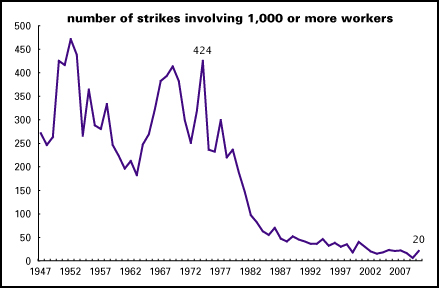
Working Hard or Hardly Working?
I never thought I'd see NPR put out what was essentially a hit piece on someone who has been dead since the 1940s, but they did it. It was almost staggering to see the lack of any insight whatsoever on the part of what is supposed to be that liberal radio bastion, when ideals like full employment, weekends off, and pensions have been seen as a liberal brass rings for decades. Instead, we have publicly-funded radio telling us that we should be working more, and we should be happy about it.
But let's examine the 40-hour week, shall we? New studies are showing that not only are workers happier when they work six hour days for the same pay scale as an eight hour day, but they are also more productive. Flatly put, an 8 hour day encourages goofing off. We've all done it: you punch in to work, get to chatting with a coworker, checking the news or even just daydreaming and before you know it it's halfway to lunchtime and you're out for a coffee break. Now, what fool is going to go up to their boss and say "Chief, I'm terribly sorry, but can you please dock my pay for the last two hours? I haven't been performing anywhere near up to snuff, I'm afraid." Heck, in a country like America where productive has far outpaced compensation, we're all scrabbling for every dime we can get.

And so, we have a fundamentally broken system: people don't work as hard because they need the hours, but they're essentially wasting up to 10, 15, maybe 20 hours a week doing not-work. But no one's going to say anything about it: we've got a good thing going here, don't mess it up. If I got bumped down in pay, we'd have to give up some of the few creature comforts we actually have in this stagnant economy. And so, solidarity takes on a strange new twist: we have a largely union-less working population staging what amounts to a 20 year slowdown in work, all just to make sure we have food on the table. And, most despressingly, while we could push for less hours, better pay, and ultimately a happier and more productive workforce, 30 years of Reaganomics has taught us that the system is hopelessly rigged and that you just need to keep your head down and get as much as you can before the next boom is followed by the next bust.
This isn't any way to live, particularly in the richest, most prosperous country the world has ever seen. Get involved: support labor, support organizing, support card checks, support solidarity. If we all were to work together, we could effectively spit in the eye of the selfish, objectivist, money-grubbing and greed-uber-alles culture that has put us in this thoroughly broken situation. As Ben Franklin one said, "We must, indeed, all hang together, or assuredly we shall all hang separately." Who knows what the next crash in this money-mad system will do, or whether it will put you, or me, or all of us out of a job. We can't afford to wait for the noose to come around our necks, we must work to fix the broken system now!
At Your Service,
Doremus Jessup
But let's examine the 40-hour week, shall we? New studies are showing that not only are workers happier when they work six hour days for the same pay scale as an eight hour day, but they are also more productive. Flatly put, an 8 hour day encourages goofing off. We've all done it: you punch in to work, get to chatting with a coworker, checking the news or even just daydreaming and before you know it it's halfway to lunchtime and you're out for a coffee break. Now, what fool is going to go up to their boss and say "Chief, I'm terribly sorry, but can you please dock my pay for the last two hours? I haven't been performing anywhere near up to snuff, I'm afraid." Heck, in a country like America where productive has far outpaced compensation, we're all scrabbling for every dime we can get.

And so, we have a fundamentally broken system: people don't work as hard because they need the hours, but they're essentially wasting up to 10, 15, maybe 20 hours a week doing not-work. But no one's going to say anything about it: we've got a good thing going here, don't mess it up. If I got bumped down in pay, we'd have to give up some of the few creature comforts we actually have in this stagnant economy. And so, solidarity takes on a strange new twist: we have a largely union-less working population staging what amounts to a 20 year slowdown in work, all just to make sure we have food on the table. And, most despressingly, while we could push for less hours, better pay, and ultimately a happier and more productive workforce, 30 years of Reaganomics has taught us that the system is hopelessly rigged and that you just need to keep your head down and get as much as you can before the next boom is followed by the next bust.
This isn't any way to live, particularly in the richest, most prosperous country the world has ever seen. Get involved: support labor, support organizing, support card checks, support solidarity. If we all were to work together, we could effectively spit in the eye of the selfish, objectivist, money-grubbing and greed-uber-alles culture that has put us in this thoroughly broken situation. As Ben Franklin one said, "We must, indeed, all hang together, or assuredly we shall all hang separately." Who knows what the next crash in this money-mad system will do, or whether it will put you, or me, or all of us out of a job. We can't afford to wait for the noose to come around our necks, we must work to fix the broken system now!
At Your Service,
Doremus Jessup
Seek to Understand
A tisket, a tasket... Hillary Clinton's #@$% basket.
No doubt you've heard by now about Mrs. Clinton's statement about 50% of Republican nominee Donald Trump's supporters fitting into the now-famous "Basket of Deplorables." While it wasn't the best thing she could have said (and in fact just cements in the ugly, elitist snob stereotype that the upper crust of the Democratic party has been attracting since Al Gore) let's look instead at what she said afterwards the soundbyte:
This should have been the focus of her statement. This should have been what everyone was paying attention to. Unfortunately, the current state of broadcast media seems more akin to ambulance chasers than journalists, the leading comments got more play... which is an utter shame.
I'm not Secretary Clinton's biggest fan; far from it. Like 60% of Minnesota, I supported Bernie Sanders in the primary. However, in the above paragraph Mrs. Clinton hit on something so incredibly important and necessary for this bizarre election cycle that it bears examination. It's easy to just write off Trump supporters as all evil or all racist or all stupid... but where does that get us on the day after election day? Fellow DFLers, we must remind ourselves that this is, as of recent polling, darn near half the population of the entire United States of America. To discount them outright as misguided, sad, or uninformed is to not only sabotage any chance of meaningful dialogue, but also to destroy any chance for future compromise and teamwork.
There is a lot said by Mrs. Clinton that is true: after 30 years of triangulation, welfare reform, and trade deals, the Democratic Party is being perceived as a part of elites, and we must work to fix that. People are angry, and they would rather burn down the house with all of us inside it as long as it meant something would finally be done to address their desperation. We can't keep pretending like they don't matter. We can't keep insisting that they don't count. They are our constituency just as much as anyone else, and simply engaging in gang warfare of Red vs. Blue is what got us into this paralyzed state of government to begin with.
Sit down with people. Talk to them. Listen to them. And when it's all done, and you say you're going to work as a DFLer to make things better, actually work to make things better for everyone. If we don't, we can't call ourselves anything better than those maniacal partisans on the right. We have to be better... but that doesn't mean we have to be nice. Reality has a well-known liberal bias, and we have objective facts on our side, particularly as the unique DFL: our policies work, but there's more that we can do. We need to make sure that everyone in Minnesota understands that we are working for the betterment of ALL, not just our donors or our friends. If we wall ourselves up in our fortress and say we're not as bad as the other person in the other fortress, that doesn't make us good. It's time we start walking the walk if we're going to talk the talk.
As President John Kennedy said, "We choose to... do the other things, not because they are easy, but because they are hard." The Democratic-Farmer-Labor party has a unique opportunity to be the truly Progressive alternative and win the votes of not just 51% of the people, but 60, 70, 80 percent. It won't be easy, it will be hard, but it's what needs to be done to continue the excellent policies of Governor Dayton and continue Minnesota's reputation as a bright, shining Star of the North in terms of prosperity, equality, and most of all, compassion.
"We all do better when we all do better."
-Paul Wellstone
At Your Service,
Doremus Jessup
No doubt you've heard by now about Mrs. Clinton's statement about 50% of Republican nominee Donald Trump's supporters fitting into the now-famous "Basket of Deplorables." While it wasn't the best thing she could have said (and in fact just cements in the ugly, elitist snob stereotype that the upper crust of the Democratic party has been attracting since Al Gore) let's look instead at what she said afterwards the soundbyte:
“But the other basket — and I know this because I see friends from all over America here — I see friends from Florida and Georgia and South Carolina and Texas — as well as, you know, New York and California — but that other basket of people are people who feel that the government has let them down, the economy has let them down, nobody cares about them, nobody worries about what happens to their lives and their futures, and they’re just desperate for change. It doesn’t really even matter where it comes from. They don’t buy everything he says, but he seems to hold out some hope that their lives will be different. They won’t wake up and see their jobs disappear, lose a kid to heroin, feel like they’re in a dead end. Those are people we have to understand and empathize with as well.”
This should have been the focus of her statement. This should have been what everyone was paying attention to. Unfortunately, the current state of broadcast media seems more akin to ambulance chasers than journalists, the leading comments got more play... which is an utter shame.
I'm not Secretary Clinton's biggest fan; far from it. Like 60% of Minnesota, I supported Bernie Sanders in the primary. However, in the above paragraph Mrs. Clinton hit on something so incredibly important and necessary for this bizarre election cycle that it bears examination. It's easy to just write off Trump supporters as all evil or all racist or all stupid... but where does that get us on the day after election day? Fellow DFLers, we must remind ourselves that this is, as of recent polling, darn near half the population of the entire United States of America. To discount them outright as misguided, sad, or uninformed is to not only sabotage any chance of meaningful dialogue, but also to destroy any chance for future compromise and teamwork.
There is a lot said by Mrs. Clinton that is true: after 30 years of triangulation, welfare reform, and trade deals, the Democratic Party is being perceived as a part of elites, and we must work to fix that. People are angry, and they would rather burn down the house with all of us inside it as long as it meant something would finally be done to address their desperation. We can't keep pretending like they don't matter. We can't keep insisting that they don't count. They are our constituency just as much as anyone else, and simply engaging in gang warfare of Red vs. Blue is what got us into this paralyzed state of government to begin with.
Sit down with people. Talk to them. Listen to them. And when it's all done, and you say you're going to work as a DFLer to make things better, actually work to make things better for everyone. If we don't, we can't call ourselves anything better than those maniacal partisans on the right. We have to be better... but that doesn't mean we have to be nice. Reality has a well-known liberal bias, and we have objective facts on our side, particularly as the unique DFL: our policies work, but there's more that we can do. We need to make sure that everyone in Minnesota understands that we are working for the betterment of ALL, not just our donors or our friends. If we wall ourselves up in our fortress and say we're not as bad as the other person in the other fortress, that doesn't make us good. It's time we start walking the walk if we're going to talk the talk.
As President John Kennedy said, "We choose to... do the other things, not because they are easy, but because they are hard." The Democratic-Farmer-Labor party has a unique opportunity to be the truly Progressive alternative and win the votes of not just 51% of the people, but 60, 70, 80 percent. It won't be easy, it will be hard, but it's what needs to be done to continue the excellent policies of Governor Dayton and continue Minnesota's reputation as a bright, shining Star of the North in terms of prosperity, equality, and most of all, compassion.
"We all do better when we all do better."
-Paul Wellstone
At Your Service,
Doremus Jessup
Subscribe to:
Posts (Atom)